The latest News and Information on DevOps, CI/CD, Automation and related technologies.
Today is day one of the RSA Security Conference in San Francisco, where thousands of security professionals from around the world come together to share new ideas, discuss global security vulnerabilities, and explore the latest technologies in the security industry.
Have you ever experienced a time when someone on your team takes off to recharge or takes unplanned downtime away from work? It may feel a bit scary as workloads shift, priorities change and the team has to pick up some slack. We all need to recharge and in some org’s, it’s imperative. The covering for each other builds trust among the team which is invaluable when you’re in the trenches daily, working hard.
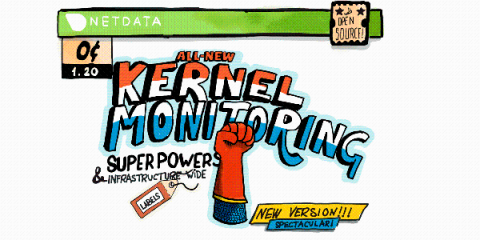
In Netdata’s first major release of 2020, we’re introducing two new features on the opposite ends of the monitoring spectrum. On one hand, we’re releasing an eBPF collector, which lets you collect, monitor, and visualize incredibly precise metrics straight from the Linux kernel. On the other, we added the ability to label agents to help you organize entire infrastructures and see every important piece of information about streaming nodes in one place.
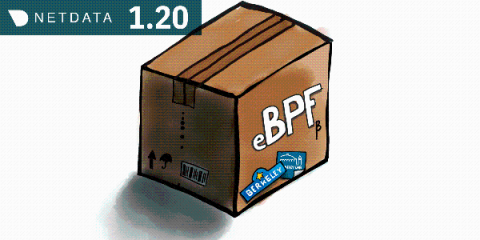
Your application isn’t finished when you’ve closed the last if block and you lined up all the brackets. There’s a whole other world of testing, debugging, and optimization that you haven’t even touched yet. To help you more safely step into that complex phase of making your application even better, we’ve just released a brand-new eBPF collector in v1.20 of Netdata.
In this blog post, we are going to cover how to perform container image scanning for CircleCI using Sysdig Secure. Image scanning allows DevOps teams to detect and resolve issues, like known vulnerabilities and incorrect configurations, directly in their CI/CD pipelines. Using Sysdig Secure, you can enforce image policies to block vulnerabilities before they reach production environments and fix them faster while the developer still has the context.
Log management plays an important role in helping to debug Kubernetes clusters, improve their efficiency, and monitor them for any suspicious activity. Kubernetes is an open-source cluster management software designed for the deployment, scaling, and operations of containerized applications.