Operations | Monitoring | ITSM | DevOps | Cloud

Shipped: Monthly cost comparison in Explorer gets a glow up

Months have different numbers of days, and a monthly cost chart built on raw totals mixes that calendar difference into the trend. A 28-day February next to a 31-day March shows a 10.7% increase even when daily spend never moved. The same math works in reverse: real growth in a short month can look flat, hiding an increase worth investigating. That costs you time in two places. The first is triage.


AI budgeting: how to plan and forecast AI spend

AI budgeting is the process of planning, allocating, and forecasting an organization's AI spend: model and API costs, AI infrastructure, tooling, and the people running it all. It differs from traditional budgeting because AI spend is usage-based, scales with product success rather than headcount, and often spans multiple providers.

Why Growth Leaders are Abandoning Effort-based Models, and What Comes Next

Every major enterprise has placed its AI chip. McKinsey pegs the annual economic potential of generative AI at $2.6 to $4.4 trillion. HFS Research sizes the Services-as-Software market at $1.5 trillion by 2035. Gartner forecasts that 40% of enterprise applications will embed task-specific AI agents by the end of this year, up from under 5% in 2025. These are the field reports of a reordering already underway.

What data sources does agentic ITOps use

Agentic IT operations have arrived. It’s no longer a question of if enterprise IT departments will adopt agentic ITOps, but how quickly. The question we hear most often at BigPanda isn’t “what are agentic ITOps,” it’s “what data do we actually need to get started?” That’s the right question to ask. Agentic AI is only as good as the data and context that feeds it. Real-time observability and telemetry data from machines. Structured ITSM and workflow records.

Stop Guessing Where the Network Broke

Modern IT teams invest heavily in monitoring infrastructure, applications, servers, and network devices. Yet when users report that a critical cloud service is slow or a branch office loses connectivity, one question often remains difficult to answer: where is the problem actually occurring? Is the issue inside your network? Is it your ISP? Has a routing change introduced excessive latency? Did an upstream provider experience an outage?

Migrating from Nagios XI to WhatsUp Gold: A Practical Step-by-Step Guide

Monitoring platforms rarely become complex overnight. In many Nagios XI environments, complexity builds gradually through years of useful customizations, custom plugins, one-off fixes, and undocumented operational knowledge. Each addition may have solved a real problem at the time, but over the years the result can become difficult to maintain, explain, and hand over to new administrators.

New Alert Policy Templates for Kentik Protect: Security and Compliance Visibility in Minutes

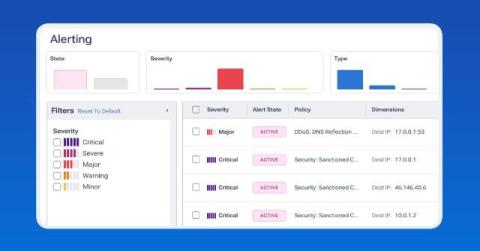
Securing distributed networks and maintaining regulatory compliance is often manual, expertise-heavy work of configuring alert policies. Kentik Protect now includes additional pre-configured, production-ready Alert Policy Templates across three categories: outbound security and DDoS, carpet bombing defense, and geopolitical compliance monitoring.

Why Energy Efficiency Matters in Modern Office Buildings

Commercial office buildings consume massive amounts of electricity daily to keep lights, computers, and climate systems running continuously. Rising utility costs and changing corporate standards push management teams to evaluate baseline energy habits. Cutting unnecessary power usage preserves operational capital and lowers overhead costs. Modernizing office infrastructure creates leaner, more resilient business environments for tenants and owners alike. Addressing structural energy waste improves indoor comfort while shielding properties from fluctuating power rates.

Building an End-to-End Drone Ecosystem: The Technologies That Need to Work Together

Commercial drone technology is rarely a single application running alongside an aircraft. A complete solution may include flight software, onboard sensors, telemetry, cloud infrastructure, web and mobile interfaces, data processing pipelines, analytics tools, and integrations with existing business systems.