The latest News and Information on Managed Service Providers and related technologies.
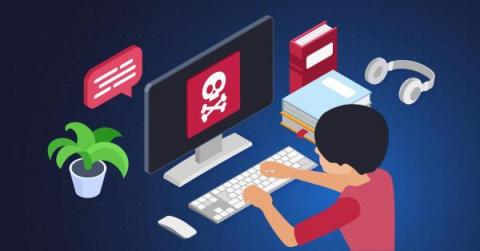
Over the past couple of years, we’ve witnessed a rapid adoption of endpoint detection and response (EDR) in the MSP space. An increasing number of managed service providers are choosing to leave behind legacy antivirus (AV) solutions in favor of EDR security. The differences between the core functions of AV and EDR are easy to understand and many see EDR as an obvious choice. However, some still believe that AV is enough because the customers they support have a low risk profile.
With the surge of remote workers and a need for increased flexibility, the traditional workplace is a thing of the past. According to Slack’s Future-Forum Pulse Report, the percentage of people working in hybrid and remote arrangements has increased to 58% in the United States. This means that organizations will need to adapt to a hybrid model to maximize employee productivity while supporting collaboration in and out of the office.
“Just one more tool…what’s the harm?” Because MSPs tend to be technophiles in some measure, we can sometimes be lured in by shiny objects known as “the newest and flashiest solution”. While this isn’t catastrophic in its own right, the “just one more tool” effect is compounding in nature, and so are its dangers.
We live in a world where 83% of security professionals believe that employees have accidentally exposed customer or business-sensitive data at their organization via email (Business Wire). This sheds light on a great vulnerability faced by MSPs and internal IT businesses worldwide: once you share critical information with your end users, that data is no longer in your hands, hence your security does not extend to it anymore. If only there was a way to prevent that! Luckily, there is.
A version of this blog first appeared in APMdigest. A new study by OpsRamp on the state of the Managed Service Providers (MSP) market concludes that MSPs face a market of bountiful opportunities but must prepare for growth by embracing complex technologies like hybrid cloud management, root cause analysis and automation.
Antivirus software refers to any program that’s specially designed to detect and remove malicious software (malware). After installation, antivirus software usually works continuously in the background to offer real-time protection against viruses and malware. A comprehensive AV solution can help you protect your device or network from various cyberthreats like malware, spyware and phishing.