In today's world, where data plays a huge role in business success, companies must manage and analyze large amounts of information. Data warehousing has become a critical part of business operations to handle this challenge. Snowflake, a top cloud data warehousing platform, provides a scalable, secure, and flexible solution to help businesses adapt to their ever-changing data needs.
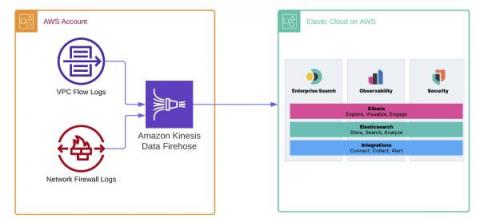
In March of 2022, Elastic decided to close source the most popular log management and analytics solution in the world: the ELK Stack. Millions chose ELK as their logging platform and made it the heart of their troubleshooting operations because it was open source. And suddenly, it wasn’t – leaving many looking for other options. Shortly after, AWS launched OpenSearch and OpenSearch Dashboards as open source alternatives to Elasticsearch and Kibana, respectively.
Today we’re excited to announce the InfluxDB add-on for Ockam Orchestrator. Through the use of the add-on, customers that are using InfluxDB Cloud can use Ockam to improve their security posture by automatically granting uniquely identifiable, least privilege, time-limited credentials for any client that needs to connect to InfluxDB Cloud.
As an Elasticsearch administrator, you will inevitably have to delete an index at some point. There could be several reasons why this might be necessary: This article provides an overview of available methods to back up and restore an Elasticsearch index in the event of deletion.
When a data index is created in Elasticsearch, the data is divided into shards for horizontal scaling across multiple nodes. These shards are small pieces of data that make up the index and play a significant role in the performance and stability of Elasticsearch deployments. A shard can be classified as either a primary shard or a replica shard. A replica is a copy of the primary shard, and whenever Elasticsearch indexes data, it is first indexed to one of the primary shards.