Operations | Monitoring | ITSM | DevOps | Cloud

The latest News and Information on DevOps, CI/CD, Automation and related technologies.

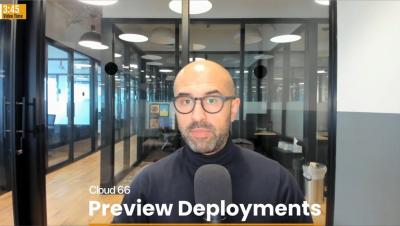
Preview Deployments - Cloud 66 Demo

What are Preview Deployments? Preview Deployments automatically build and deploy a (private) preview version of your application whenever you commit changes to your repo. The preview runs alongside your active application and helps you to quickly test changes to your code without having to deploy to a separate environment. What is Cloud 66? Cloud 66 gives you everything you need to build, deploy and maintain your applications on any cloud, without the headache of dealing with “server stuff”.
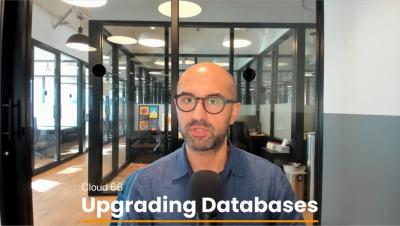

Upgrading Databases - Cloud 66 Demo

Cloud 66 will not do in-place database upgrades, because this process may cause your application to stop working or may not be possible automatically. To upgrade your database through Cloud 66, we recommend that you create a new application (at which point Cloud 66 will deploy the newer database version). Once the new application is created, you can migrate data from your old application to your new application.

Improve your EC2 rightsizing recommendations with Datadog and AWS Compute Optimizer

While cloud solutions can give you greater flexibility as you scale your infrastructure, limited visibility into resource utilization makes provisioning the right amount of compute resources challenging. To ensure that every workload is fully supported, many organizations may opt to over-provision, which leads to overspending. Or, in an attempt to maximize cost savings, organizations may under-provision, leaving workloads unsupported and risking serious performance impacts.

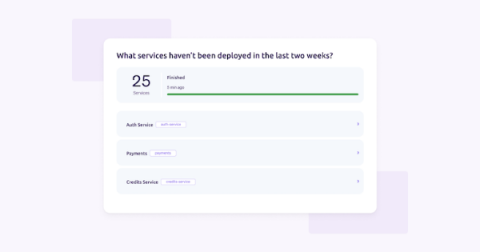
Make use of your service data with the Query Builder

The service catalog is an indispensable component of a team’s software development infrastructure. Anything you need to know about your microservice architecture - whether it is knowing who owns a particular service or what another service’s dependencies are - lives inside this repository. Its potential, however, is not limited to being a storehouse for all the data about your microservices.

What is Azure Blob?

Today, data is invaluable. Many businesses store large amounts of it for everyday operations. Some information is stored in a hierarchical form, but companies must often hold significant amounts of data without any organization. The solution? Microsoft Azure’s Blob Storage. In this article, we’ll consider the key elements of Blob Storage, how it works, and why it’s important.

Fleet Introduces OCI Support for Helm Charts

Rancher, the open source container management platform, uses Fleet to enable its continuous deployment features. Fleet brings GitOps functionality to Rancher. Fleet in Rancher 2.7.0 can fetch Helm charts from OCI registries. Using OCI registries to store Helm charts is an increasingly popular storage method. It allows storing your charts in a registry alongside your container images. This unifies the storage options for charts and reduces friction. Using a chart in an OCI registry is fairly simple.

Installing and Running Kubewarden In Air-Gapped Environments

We are excited to announce that deploying Kubewarden in air gap environments has been simplified and documented! For that, you will need a private OCI registry accessible by your Kubernetes cluster. If you’re unfamiliar with Kubewarden, it’s a policy engine for Kubernetes. Its mission is to simplify the adoption of policy-as-code. Kubewarden policies are WebAssembly modules; therefore they can be stored inside an OCI-compliant registry as OCI artifacts.

Everything I Wanted To Know About Kubernetes Autoscaling

Kubernetes is today the most well-known container scheduler used by thousands of companies. Being able to quickly and automatically scale your application is something standard nowadays. However, knowing how to do it well is another topic. In this article, we'll cover how pod autoscaling works, how it can be used, when it's exciting and not, and finally, we'll cover it with a Qovery usage we have internally.