Operations | Monitoring | ITSM | DevOps | Cloud

The latest News and Information on DevOps, CI/CD, Automation and related technologies.

Introduction to Cloud-native Monitoring and Observability - Civo

Our applications and infrastructure provide us with vast amounts of data about their performance. To gain control over this amount of data, we must process it to be useful information. This information can offer you insights into where your application could be performing better, with more efficiency, or with fewer errors. Your insights can only be as good as the data you gather and how you organize it. More is not (always) better - this is where observability comes in.

Everything you need to know about cloud-native

Cloud technology, and applications running in the cloud, are becoming more and more common. With this rise in cloud computing, application development has needed to change as well, resulting in what can be called the cloud-native approach to software development. In this article, you will learn all about cloud-native technology and how cloud-native companies approach building their applications.

How to Test for Packet Loss: A Complete Guide

Among all the inconveniences endemic to living in the 21st century, there are few as common as a faulty internet connection. Most everyone with internet access is familiar with the experience but perhaps less so with the reason why. There are several, but chief among them is packet loss. In this article, we’ll explore what packet loss is and show you some of the first steps to conducting a packet loss test. But first, let’s briefly review what a packet is.

5 Takeaways From "Behind the Curtain: The Road to Terraform"

How much time are you wasting initializing your Terraform environments? If your answer is, “more than we should,” then we have some tips for you. Terraform is a popular infrastructure-as-code (IaC) tool for anyone who deploys to the cloud. We use it here at JFrog to help manage infrastructure for our SaaS customers, and recently added support in Artifactory to manage your Terraform files (provider, modules, and backend).

Migrate from Windows DNS Active Directory-Integrated to AWS Route53 Safely in 3 Commands

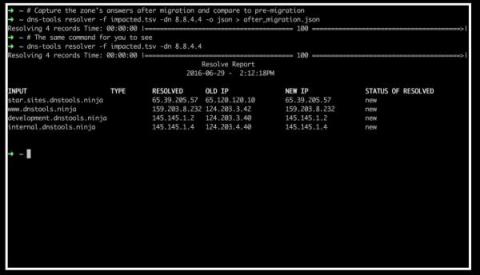
Migrating your DNS to a cloud-based service like Amazon’s Route53 service can be a daunting task. With dns-tools, you can test your DNS records before and after the migration to ensure that everything made it across in one piece. If you are migrating from a BIND DNS server, see our blog post here. Follow these four steps to migrate from a Windows DNS Active-Directory integrated server to Route53.

3 Steps to Prepare DNS Changes for a Data Center Migration

Data center and cloud migrations often require changing IP addresses of your servers and application end points. These changes require careful planning and precise execution in order to minimize downtime. Typically, this is executed by manually searching your DNS server’s configuration for each server that is migrating.

Regulating Cloud Costs: How To Implement Intelligent Spending Habits

Whether you’re a product manager, a marketing organization, or in finance, you’re probably using the cloud in some way. But many businesses are still immature when it comes to building systems in the cloud, especially when it comes to how they use their financial resources. Here, CloudZero founder and CTO Erik Peterson breaks down the responsibility of using the cloud, how to break down the costs of cloud computing, and what you need to do to change the conversation from cost to profit.