The latest News and Information on DevOps, CI/CD, Automation and related technologies.
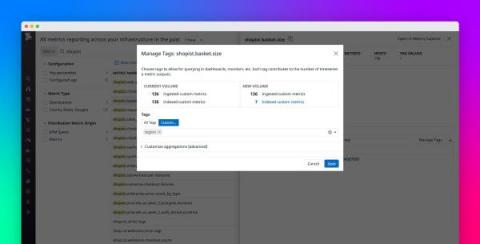
Sending custom metrics to Datadog allows you to monitor important data specific to your business and applications, such as latency, dollars per customer, items bought, or trips taken. And tags are key to being able to slice and dice these custom metrics to quickly find the information you need. But collecting enough custom metrics to have complete visibility can be cost prohibitive. For example, you might run microservices instrumented across thousands of containers.
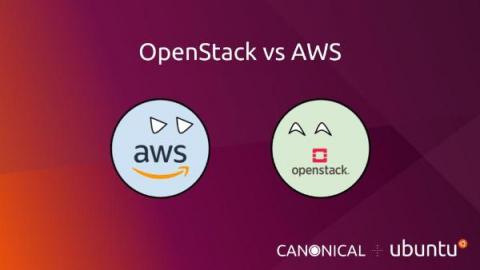
OpenStack vs AWS is a discussion that almost every organisation must conduct when adopting a cloud strategy. This is because OpenStack and AWS are undoubtedly some of the most popular cloud technologies in both public and private cloud space. While AWS is the most popular commercial cloud platform, OpenStack remains its most popular open source equivalent. Both have their own pros and cons. But which one is better for you?
Over the past few years, cloud computing has enabled agile, dynamic management of software and hardware components, on-demand. Nowadays, we can define our desired infrastructure in as little as a few lines of code, and we can provision real servers on cloud providers like AWS or Azure. Terraform is an open-source infrastructure-as-code (IaC) tool that has become the de facto solution for provisioning one aspect of those components.
Because DevOps practices can bring great speed and reliability to the software delivery lifecycle, release management can seem daunting. But, the improved visibility and collaboration brought about by DevOps can also help with the release management process. While the general concept of release management doesn’t really change between ITIL (IT Infrastructure Library) and DevOps, there are a few ways that the process differs.
Continuous integration (CI) makes the cycle from design to code to building artifacts seamless and consistent. Continuous delivery (CD) makes delivery of that artifact to an environment the same every time. But, what about the actual environment the artifact is running in? Is it the same every time? That’s a hard thing to guarantee — unless you take advantage of an Infrastructure-as-Code (IaC) approach. This post explains how to use Infrastructure-as-Code to improve CI/CD.
DevOps-oriented engineers live at the intersection of IT operations and software development – understanding much of what it takes to maintain IT infrastructure while also being able to write code and deploy new services. DevOps-minded teams not only create services – but they also maintain them. A DevOps structure forces teams to take accountability for their applications and infrastructure instead of allowing developers to throw code over the proverbial wall to IT operations.