Operations | Monitoring | ITSM | DevOps | Cloud

The latest News and Information on DevOps, CI/CD, Automation and related technologies.

What is Prometheus Pushgateway?

Prometheus is a free and open-source software for real-time systems and event monitoring and alerting. Originally developed at SoundCloud, Prometheus became a project of the Cloud Native Computing Foundation in 2016, alongside other popular frameworks such as Kubernetes. To start using Prometheus, you’ll need a solid understanding of all of the tool’s functionality.
Kubernetes automation with Relay

Kubernetes — a popular open source container orchestration system — enables you to easily deploy, monitor, and scale cloud-native application workloads in both private and public cloud environments. In other words, Kubernetes does the hard work of managing containerized applications, giving you more time to spend building it.

What Is Container Orchestration?

Since the revolutionization of the concept by Docker in 2013, containers have become a mainstay in application development. Their speed and resource efficiency make them ideal for a DevOps environment as they allow developers to run software faster and more reliably, no matter where it is deployed. With containerization, it’s possible to move and scale several applications across clouds and data centers. However, this scalability can eventually become an operational challenge.

Overcoming Database DevOps Challenges: Part 1

As part of our research for the 2021 State of Database DevOps report, we asked 3,000+ recipients what they consider to be the greatest challenge when integrating database changes into a DevOps process. According to the respondents, these are the most important challenges facing database professionals when introducing DevOps practices to database development.

Finding the Bug in the Haystack: Correlating Exceptions with Deployments

You’re called in. The system is misbehaving. It could be a key metric going crazy, or exceptions starting to fire. You’re troubleshooting, beating around the bush, just to realize that one of the team’s deployments was the one messing things up. Sounds familiar? If you’re practicing continuous deployment, you probably experience that several times a week, if not more. Users report that 50% of their outages are due to infrastructure and code changes, namely deployments.

Introducing Datadog's Lambda extension

AWS Lambda extensions enable you to seamlessly integrate third-party tooling with your Lambda environment so you can run custom code or monitoring agents alongside your functions. We’ve partnered with AWS to create a Lambda extension that offers a more cost-effective, simplified process for collecting data from your functions.

Why Logging Matters Throughout the Software Development Life Cycle (SDLC)

There are multiple phases in the software development process that need to be completed before the software can be released into production. Those phases, which are typically iterative, are part of what we call the software development life cycle, or SDLC. During this cycle, developers and software analysts also aim to satisfy nonfunctional requirements like reliability, maintainability, and performance.

5 Steps to Starting DevOps with a JFrog Free Subscription

The JFrog Free subscription is a SaaS cloud offering of the JFrog DevOps Platform that provides software developers, DevOps Engineers, System Administrators and students a sandbox environment to explore solutions to common DevOps challenges. Here are examples of common DevOps challenges, where having a free subscription to the JFrog Platform helps.

What Is the Database Server Doing?

One of the most common questions database professionals are asked by their systems and virtual machine (VM) administrators is “Why does the database server need so much memory?” You’ll get a more detailed answer to that question later in this post, but it’s important to understand a database engine is almost like a server within a server.

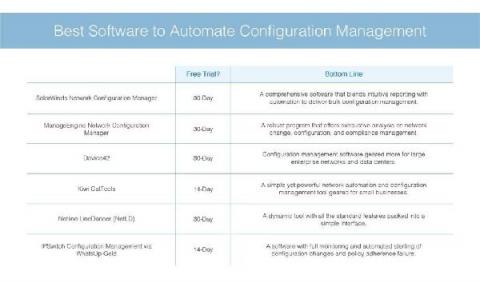
How to Manage Network Configurations + Best Software to Automate Configuration Management

Businesses both small and large require agility in how they handle device firmware and network configurations. For large networks especially, manual monitoring and change implementation can be inefficient. As such, more and more IT departments turn to automated network configuration management tools with bulk change capabilities.