Operations | Monitoring | ITSM | DevOps | Cloud

The latest News and Information on DevOps, CI/CD, Automation and related technologies.

Understanding the Complete Cloud Cost of Kubernetes

When organizations think about the relationship between Kubernetes and cloud costs, they often focus on Kubernetes’ auto-scaling capabilities and what this means for optimizing compute resources. Kubernetes does allow organizations to provision compute resources more thinly, because the platform allows them to scale up automatically if there’s a demand spike in the middle of the night.

Architectural decisions that impact Kubernetes costs

One of the mistakes organizations make related to Kubernetes costs is addressing them primarily after-the-fact, once the application is running successfully. There are certainly changes that can be made to improve efficiency once the application is running, but cost-control measures are best considered at the beginning, not middle or end, of the application lifecycle.

LogicTalks - How Harvard Gained Visibility and Operational Confidence through Monitoring

In this episode of LogicTalks, Mark Banfield, Chief Revenue Officer at LogicMonitor, is joined by Ken Perry, Product Manager and Technology Monitoring Architect at Harvard University to discuss how LogicMonitor has shifted Harvard's monitoring strategy. Ken explains how LogicMonitor has helped to break down monitoring silos between departments, solve unique challenges and use cases within such a large organization, and how LogicMonitor aided Harvard in it's transition to remote learning during the COVID pandemic all while helping to build operational confidence throughout Harvard and it's leadership.

Kubernetes vs. Docker

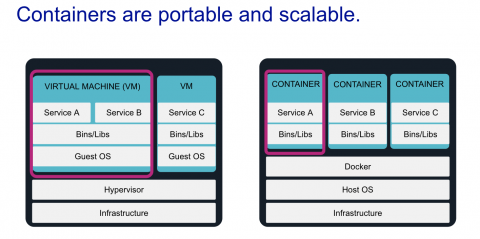
Kubernetes and Docker each play a vital role in modern, microservices-based application development. Since Kubernetes and Docker work in unison to help develop, deploy, and manage large-scale applications – they are not mutually exclusive technologies and they are certainly not in competition with each other. Nevertheless, Kubernetes and Docker are often misunderstood by the non-developer community. To clear up the confusion around Kubernetes vs. Docker, we’ve written this guide.

Integrating Sensu Go into your CI/CD pipeline with sensuctl prune

Since the release of Sensu Go, many in our community have told us Sensu is easier and faster to deploy, more portable, and more compatible with containerized and ephemeral environments (as compared to Sensu Core, the original version of Sensu). In a recent webinar, I talked about integrating Sensu Go with your CI/CD pipeline and how to use the sensuctl prune command to keep your Sensu resources in a declarative state, reducing dependence on traditional configuration management tools.

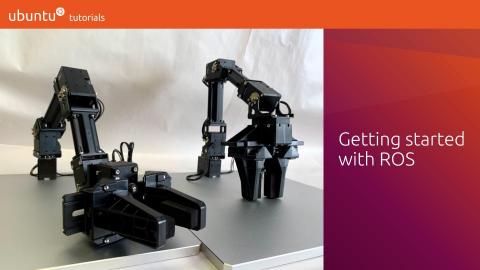
Tutorial: Getting Started with ROS

ROS, the Robot Operating System, is the platform of choice for robot development. However, the breadth and depth of existing documentation can be daunting for the ROS beginner. Where should you start learning about ROS 2 on Ubuntu? All robots based on ROS and ROS 2 are programmed using five simple but core constructs: In this tutorial and associated video we’ll introduce these concepts with simulated robots.

Kubernetes vs. Docker: What Does It Really Mean?

“Kubernetes vs. Docker” is a phrase that you hear more and more these days as Kubernetes becomes ever more popular as a container orchestration solution. However, “Kubernetes vs. Docker” is also a somewhat misleading phrase. When you break it down, these words don’t mean what many people intend them to mean, because Docker and Kubernetes aren’t direct competitors.