The latest News and Information on DevOps, CI/CD, Automation and related technologies.
Using the bolt/terraform integration (https://github.com/puppetlabs/puppetlabs-terraform) Daniel shows how to create arbitrary infrastructure as part of system-level acceptance testing for modules using Puppet Litmus (https://github.com/puppetlabs/puppet_litmus). #litmus #testing #terraform
Canonical has received FIPS 140-2, Level 1 certification for cryptographic modules in Ubuntu 18.04 LTS, with FIPS-validated OpenSSL-1.1.1. modules included. This certification enables organisations to meet compliance requirements within the public sector, healthcare and finance industries when utilising Ubuntu 18.04 LTS within public and private cloud environments. Canonical worked with U.S. Government and BSI accredited laboratory, atsec information security, for the 18.04 LTS FIPS certification.
In Ubuntu 20.04 LTS, the OpenSSL 1.1.1f library has been modified to use Security Level 2 by default (previous versions of Ubuntu use Security Level 1). Security Level 2 guarantees that protocols, key exchange mechanisms, cipher suites, signature algorithms, certificates and key sizes provide a minimum of 112 bits of message secrecy. In practice, it means that RSA keys are required to be at least 2048 bits long and ECC keys at least 224 bits using the SHA256 certificate signature algorithm.
Open-source software started around the millennium and is now one of the cornerstones of modern software development. Open-source projects make their source code available to anyone so that engineers across the world can inspect the code to find bugs or make changes to suit their needs. Today, there are more than 180,000 open-source projects available, according to Wikipedia. We at StackState are big believers in open-source software.
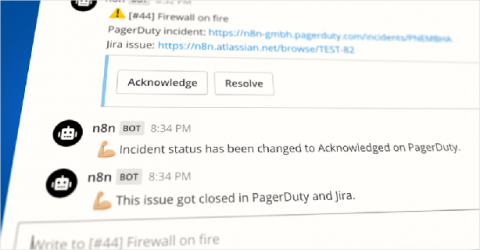
Tanay is the Head of Developer Relations at n8n. He has published books on WebVR, virtual assistants on Raspberry Pi, and FirefoxOS. He has been listed in the about:credits of the Firefox web browser for his contributions to the different open source projects of the Mozilla Foundation. I’ve been involved in the DevOps world for a while and yet I finished reading The Phoenix Project only recently. The book piqued my interest in how teams execute their incident response playbooks.
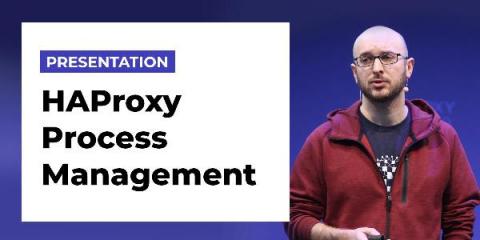
In his HAProxyConf 2019 presentation, William Lallemand (Senior HAProxy Developer) shows how process management in HAProxy has evolved since the beginning of the project; With the advent of systemd, new techniques had to be developed so that users could reload HAProxy safely. The Master-Worker mode simplifies the management of HAProxy processes and introduces interesting features.
I am a Puppet beginner and I’m happy to make the code manager integration happen. I like to play around with my code and test my code changes on my agent nodes. However, the way I’m testing my code is a bit tedious: Save my code change, push into remote repo, run code deploy, and run Puppet on agents. Is there a simple way to quickly test my code? Yes! The answer is using Onceover.