Operations | Monitoring | ITSM | DevOps | Cloud

The latest News and Information on DevOps, CI/CD, Automation and related technologies.

The State Of FinOps 2025: Cloud+, AI Visibility, And Other Key Takeaways

The FinOps Foundation just released the sixth installment of its annual State of FinOps report. The 2025 installment contains a few key themes: In this blog, we give a little more detail on each, highlighting key statistics and takeaways from the State of FinOps 2025.


SharePoint vs. OneDrive vs. Teams

Microsoft 365 offers multiple file storage solutions—SharePoint, OneDrive, and Teams—each designed for different use cases. However, many organizations struggle to determine where to store files and how to manage document collaboration efficiently. Choosing the wrong storage location can lead to content sprawl, security risks, and version control issues.

Understanding Cloud Infrastructure: A Beginner's Guide

Cloud infrastructure essentially consists of a set of virtual tools and resources that help deliver cloud-based services and products. Cloud infrastructure frees companies from building their own physical data centers. Instead, they rent computing capacity on a need-by-need basis. But let’s not get ahead of ourselves. In this post, we’ll define cloud infrastructure and examine cloud computing types, delivery models, and more.

Putting Your Data to Work to Protect Your Software Supply Chain Final

In today’s complex software ecosystem, ensuring security and reliability is more challenging than ever. Dependency trees are growing deeper, third-party contributions are increasing, and the risks - from vulnerabilities and misconfigurations to malicious attacks - are at an all-time high. Organizations must find ways to secure their software supply chains without compromising agility.

Complexity Can Be Chaos

Monitoring is integral to understanding what is happening in your infrastructure, applications, or other observability projects. However, a common predicament developers can land themselves in is their observability stack becoming unwieldy and unmanageable due to a lack of streamlining and/or over-complicated code. To simplify your workload, it is important to streamline your monitoring.

Azure Tagging: A Comprehensive Guide for Technophiles

Introduction: Businesses and enterprises with complex settings and backgrounds may find Azure resource management uneasy. Resource tags in Azure help manage environments competently. They improve the visibility and governance of cloud resources by organizing, tracking, and optimizing them. This post may scrutinize Azure tags and find ways to maximize the benefits of resource management.

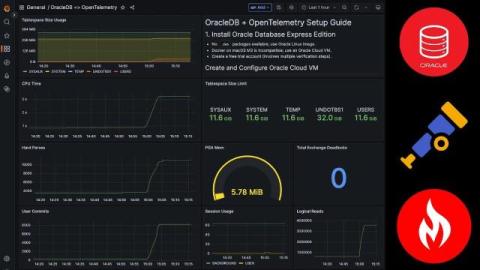
Monitor OracleDB EX with OpenTelemetry and MetricFire

OracleDB remains a top choice as a relational database management system (RDBMS), despite its strict licensing requirements. It excels at handling complex SQL queries, massive datasets, and transactional workloads, making it ideal for large Enterprise technology stacks. Its many benefits include robust indexing, partitioning, and in-memory processing to optimize query performance at scale.

Cloud Costs Out of Control? Civo Has the Answer!

Join Mark Boost as he kicks off Civo Navigate San Francisco 2025, setting the stage for two days of tech innovation and insights. Discover Civo’s mission to create a simpler, fairer, and better-value cloud solution, challenging the dominance of hyperscalers. Mark unveils his vision for a true multi-cloud future and introduces Civo’s latest innovations: Flexcore and RelaxAI. He then welcomes Kelsey Hightower to the stage for a major announcement—his new role as Civo’s Board Director—before diving into the crucial role of private cloud solutions in today’s evolving landscape.

What's new with AWS for 2025

Amazon Web Services (AWS) holds onto the top spot with a 30% share of the global cloud infrastructure market. Despite fierce competition, AWS remains the leader by consistently driving innovation in AI and cloud computing. In this blog, we explore the latest advancements, from global infrastructure expansion to enhancements in cloud services’ availability and performance, as well as what AWS has planned for 2025.