The difference between "Cloud Native" and "Cloud Hosted" products lies in their architecture, design philosophy, and how they leverage cloud infrastructure. Let’s break down the key distinctions.
You want to monitor your infrastructure? Monitoring is essential to ensure system stability, security and optimal performance. Without proper monitoring, small issues can quickly escalate into major problems and affect productivity and service availability. While there is no fixed checklist for infrastructure monitoring and it depends on your setup, there are some key areas that are worth considering when building your own monitoring strategy that fits the needs of your own environment.
In the realm of business transactions, various documents play crucial roles in ensuring smooth operations and effective coordination. Among these essential documents are work orders and purchase orders, which often serve as the foundation for initiating and managing transactions within a company. While work orders and purchase orders might appear similar at first glance, it is imperative to grasp the distinctions between these two documents to avoid potential confusion and streamline the business process.
Since the 2011 Scottish Digital Strategy, Scotland's political and economic commitment to the technology industry has been consistent and substantial. The 2020 Scottish Technology Ecosystem Review and the subsequent TechScaler startup programme are great examples of this dedication at work today. Edinburgh's vital role in these plans has been equally long-standing.
Distributed tracing has become an essential part of any application's performance monitoring strategy. As businesses adopt distributed architectures, choosing the right tracing tool is crucial for efficient troubleshooting and performance monitoring. The two most prominent choices are AWS X-Ray and Jaeger, each offering unique features and advantages. AWS X-Ray, a managed service by Amazon, simplifies tracing for applications running on AWS.
Maintaining a healthy Kafka cluster is critical to ensuring your real-time data pipelines run smoothly. However, keeping your Kafka environment in tip-top shape isn’t just about setting it up and letting it run. Regular monitoring of key metrics is essential to catch issues before they escalate, optimize performance, and keep everything humming along smoothly. So, what should we be looking at when it comes to Kafka metrics? Let’s break down the most important ones and how to interpret them.
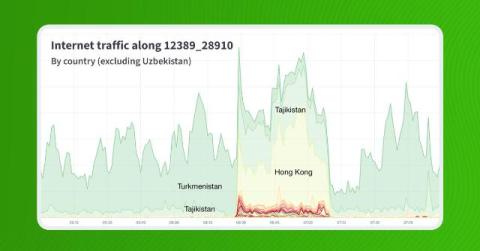
The first installment of our new blog series, Beyond Their Intended Scope, covers BGP mishaps that may have escaped the community’s attention but are worthy of analysis. In this post, we review a recent BGP leak that redirected internet traffic through Russia and Central Asia as a result of a path error leak by Uztelecom, the incumbent service provider of Uzbekistan.
Flaky tests are bad—this is a fact implicitly understood by developers, platform and DevOps engineers, and SREs alike. When tests flake (i.e., generate conflicting results across test runs, without any changes to the code or test), they can arbitrarily fail builds, requiring developers to re-run the test or the full pipeline. This process can take hours—especially for large or monolithic repositories—and slow down the software delivery cycle.
When it comes to acquiring new software for your organization, it's easy to focus on finding the right product and getting it implemented as quickly as possible. But without a structured software acquisition process, that can lead to overspending, compliance risks, or ending up with tools that don’t fit your needs. In this article, we’ll take a closer look at the software acquisition process and explore practical ways to improve it.