Operations | Monitoring | ITSM | DevOps | Cloud

The latest News and Information on Monitoring for Websites, Applications, APIs, Infrastructure, and other technologies.

Log Monitoring 101 Detailed Guide [Included 10 Tips]

Log monitoring is the practice of tracking and analyzing logs generated by software applications, systems, and infrastructure components. These logs are records of events, actions, and errors that occur within a system. Log monitoring helps ensure the health, performance, and security of applications and infrastructure. Log Monitoring helps in early detection of potential issues, ensuring systems run smoothly and efficiently. In this detailed 101 guide on Log monitoring, we will learn.

Looking at nth degree's Innovative Fractional Service Delivery Model

The nth degree team joins Cribl's Ed Bailey and Andrew Duca to discuss nth degree's innovative fractional service delivery model. This is a discussion anyone who has had to engage professional services should be interested in hearing. nth degree has developed a service delivery model that enables fast engagement and removes friction around service delivery and planning. Imagine not having to get an SOW reviewed by legal for every engagement. That alone solves a big problem for almost everyone.

Introduction to eBPF with Grafana Beyla, with Nikola Grcevski (Grafana Office Hours #25)

Nikola Grcevski, Principal Software Engineer at Grafana Labs, gives us an introduction to eBPF with Grafana Beyla. We discuss what is eBPF, how you can use it to auto-instrument applications, and how to get started with Beyla. eBPF observability is all the rage because we all want automagical instrumentation-- but does it live up to that promise? Nikola's here to tell us what eBPF can and can't do, and where he'd like to take Beyla next.

OpenTelemetry in 2023 - What we learnt from the community and our users

OpenTelemetry has brought a sea change in the world of observability. The idea of the project was to standardize the instrumentation needed for generating telemetry. Teams shouldn’t need to change how they collect data if they want to try a new visualization/backend for the telemetry data. That was the vision. This idea seems to have resonated with the developer and devops communities.

Browser Synthetic Monitoring: What is it, Types and Use Cases

Synthetic monitoring is a proactive approach that actively tests websites or apps, either scheduled or on demand, using automated testing scripts, ensuring that any issues are identified and resolved before they impact real users. This approach provides continuous oversight of the online presence, akin to having a vigilant eye on the website 24/7. In this article, we’re discussing synthetic monitoring, putting the accent on using browsers.

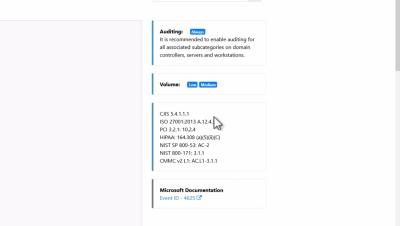
Integrating Cribl Stream with the Built-in Tables of Microsoft Sentinel

Cribl’s integration catalog is ever-expanding. At Cribl, we constantly collect feedback on where to integrate next and channel it to deliver more high-impact integrations into our catalog. Whether it is Sources, Collectors, or Destinations, we constantly add new integrations to expand our reach in the IT security and observability ecosystem.

Elevating Banking Excellence: Anodot's Real-Time Monitoring Revolution

In a recent article published by Economic Times on Dec 29, 2023, titled “Banks Told to Explore Dashboard with Real-Time Info on Services,” the Reserve Bank of India (RBI) has urged banks to embrace real-time transparency through the creation of an online dashboard. Anodot, a leader in business monitoring, is at the forefront of transforming the banking sector with its advanced real-time business monitoring dashboard designed for internal usage within banks. What does this mean?

Paving the Road for Proactive Reliability

At Expedia Group, Kaushik Patel and Nikos Katirtzis have thousands of engineers and micro-services. Heterogeneity in terms of infrastructure and technologies used over the years created inefficiencies and posed the need for a set of automated best practices for our engineering teams. Over the past 2 years, using a data-driven approach, we’ve worked on creating a set of platforms that helps teams to adopt good reliability practices, including chaos engineering, release safety, or automatic failover between cloud regions. In this talk Kaushik and Nikos will cover the platforms they’ve built, including how they used data to drive their investment decisions.