The latest News and Information on Managed Service Providers and related technologies.
MSPs own and process large amounts of sensitive data and act as gateways to the sensitive data and infrastructure of their clients, which is why cybercriminals view them as good potential targets. To adequately protect this sensitive data from today’s sophisticated attacks, it is crucial that MSPs leverage cybersecurity best practices to ensure the safety and security of their own systems and their customers’ systems.
Two software solutions that most MSPs cannot live without are known as professional services automation (PSA) and remote monitoring and management (RMM). However, it’s no secret that software solutions are expensive, so does your business really need both? Decide which software you should use after reviewing this comparison of PSA vs. RMM.
The history of digital transformation can be traced back as early as the 1940s when Dr. Claude Shannon published A Mathematical Theory of Communication, which is the theory behind the creation of the internet. Then addition of the microchip and semiconductor transistor, invented In the 1950s, established the foundation for digital transformation. Since then, the capabilities of machines and digital technology have grown exponentially, and they have fundamentally changed ways our society operates.
Against a backdrop of constantly evolving cybersecurity threats, it’s essential that MSPs understand how to own the risk conversation if they are to really help their customers effectively manage their security posture. In this blog, I want to look at what we mean by “owning the risk conversation”, and how MSPs can achieve this. For me, I look at it from the perspective of my own job.
It’s pretty easy to hit that “remind me later” button when you don’t want to wait for installations, reboots, and possible errors if something goes wrong with the update. Snoozing that patch notification can quickly become a habit, and before you know it, a critical piece of software is weeks or months out of date. More people are learning that this isn’t a bit of harmless procrastination -- it’s actually a huge cybersecurity risk.
The past few years have been a boon to the IT channel. Economic and social changes have driven more SMBs and enterprises toward outsourced IT solutions. New technologies have pushed IT profitability higher. Businesses are more focused on digital transformation than at any other point in history, while at the same time everyone with a networked device is concerned about the growing threat of cyberattack. Operations of all types know that the IT department is becoming the key to staying competitive.
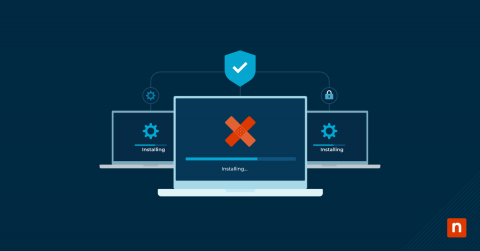
Even though testing is a part of the patch management lifecycle, sometimes bugs manage to slip through the testing stage and aren’t caught until after implementation. When this occurs, a new patch can actually break or alter software instead of fixing or updating it. This situation is known as software regression, and it has a significant impact on IT teams and MSPs around the globe.