Logz.io Unveils Enhancements to Observability Platform at ScaleUP 2021
New capabilities including Unified Dashboards and Anomaly Detection significantly advance modern full-stack observability for Logz.io users.


The latest News and Information on Observabilty for complex systems and related technologies.
Dear Trapped, Thanks for asking the question! Approaching observability as an all-or-nothing problem often leads to the project feeling daunting. But that’s not specific to observability—any project can be overwhelming if you think it needs to be done all at once, perfectly. Such as, erm, writing an entire book on observability! *looks around worriedly*
Moving beyond traditional monitoring to embrace full stack observability offers a seemingly endless range of benefits. Beyond unifying logs, metrics, and traces in a single platform, the opportunity to enlist advanced analytics and engage a more predictive approach represents another huge step forward.
Distributed tracing has been growing in popularity as a primary tool for investigating performance issues in microservices systems. Our recent DevOps Pulse survey shows a 38% increase year-over-year in organizations’ tracing use. Furthermore, 64% of those respondents who are not yet using tracing indicated plans to adopt it in the next two years. However, many organizations have yet to realize just how much potential distributed tracing holds.
Observability is a measure of how well the internal state of a system can be inferred from its external outputs. It helps us understand what is happening in our application and troubleshoot problems when they arise. It’s an essential part of running production workloads and providing a reliable service that attracts and retains satisfied customers.
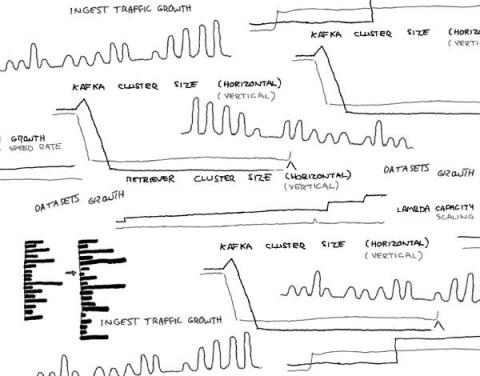
From September to early October, Honeycomb declared five public incidents. Internally, the whole month was part of a broader operational burden, where over 20 different issues interrupted normal work. A fraction of them had noticeable public impact, but most of the operational work was invisible. Because we’re all about helping everyone learn from our experiences, we decided to share the behind-the-scenes look of what happened.
Today, we are launching a new Grafana Labs product, Grafana Enterprise Traces. Powered by Grafana Tempo, our open source distributed tracing backend,.and built by the maintainers of the project, this offering is an exciting addition to our growing self-managed observability stack tailored for enterprises.