Operations | Monitoring | ITSM | DevOps | Cloud

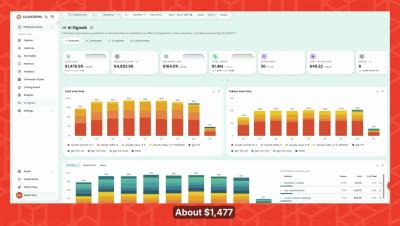
AI Signals Demo: See Exactly What Your AI Spend Is Buying | CloudZero

See who’s spending on AI, on which models, for what work, and what you got for it. Most companies can tell you what they spent on AI last month. Very few can tell you what it bought. In this demo, we show how AI Signals captures AI usage as it happens and ties every dollar to the person, team, and work behind it, across every model and provider.

CA distrust wargame: moving every certificate in 10 minutes

Last week, dozens of schools found out their certificate authority was being distrusted and they needed to replace all of their certificates in a few days. We wanted to know how we’d handle it if our own CA went away, and how long it would take. So we tried it with one of our other products. It has 6 certificates from Let’s Encrypt, deploying to 18 targets across Windows IIS, Linux nginx, Elasticsearch, and a mail server. Then we wargamed it: “Let’s Encrypt is being distrusted.

The Hard Part of Incident Remediation Is Knowing When to Act

A critical application slows overnight. Monitoring identifies an unhealthy component, and an engineer finds a familiar remedy: restart a service. The command takes seconds. Determining whether the restart will restore the application or disrupt another dependency takes far longer. That is the real challenge in enterprise incident remediation. Most IT teams already know how to automate a task.

Elastic is a Strong Performer in The Forrester Wave for AIOps Platforms, Q4 2026

Open architecture, explainable AI, and full context Elastic was named a Strong Performer in The Forrester Wave: AIOps Platforms, Q4 2026, which evaluated 10 providers across 24 criteria. Forrester gave Elastic the highest possible scores in five criteria: algorithmic trust and explainability, observability as code (OaC) and GitOps alignment, AI stack and semantic observability, sovereign deployment and data isolation, and pricing flexibility and transparency.

What is a Sovereign Cloud?

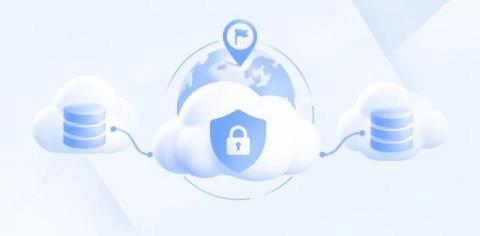
A sovereign cloud is a cloud computing environment designed to keep data, infrastructure, and operations under the control of a specific country or jurisdiction. It helps organizations maintain control over who can access their data and how it is managed. Depending on the provider and service, this may include storing data within national borders, using locally governed infrastructure, and ensuring that operations comply with regional regulations.

Match monitoring depth to workload needs with Infrastructure Basic

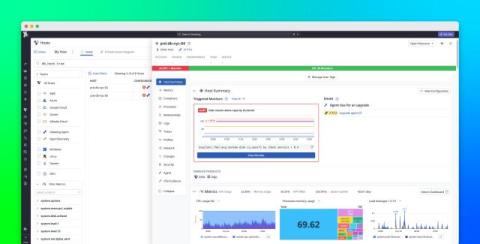
A back-office server that runs out of disk space can interrupt an important internal workflow. A process that stops on a staging host can delay development. Although workloads like these might not require application-level instrumentation, teams still need to know when the hosts that support them require attention. Without a monitoring solution tailored to these requirements, teams have to apply more monitoring than the workload needs, maintain a separate tool, or accept a gap in visibility.

Meet the new Explore: every question, one place

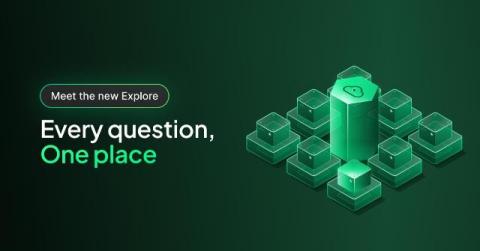
From the first alert to the root cause, without leaving the page. TL;DR: Investigating an incident is a series of quick questions, each one leading to the next. Until now, Explore made you stop between questions to translate them into syntax, switch modes or rebuild a chart. The new Explore lets you go straight from one question to the next: one workspace, any dataset, any team, any way you like to ask. Here’s what that looks like on a real night on call.

39% of Coralogix sessions are now headless

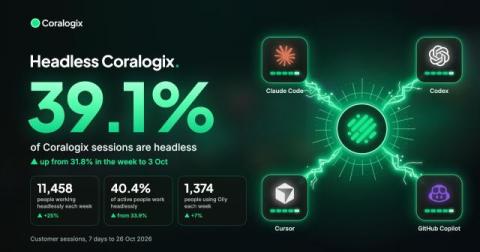
We set out to understand how customers were using Coralogix from outside the web app. Olly answers questions about a system in plain language. Coding agents query logs, examine traces, read metrics and configure the platform through the Coralogix CLI and MCP server. We wanted to see how much of this was becoming part of everyday work. In the week of 20–26 October, 39% of Coralogix sessions included Olly, the CLI or MCP.

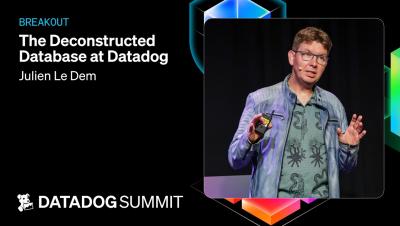
The Deconstructed Database at Datadog

As Datadog scaled to handle over a hundred trillion daily events, our engineering teams built their own custom query engines to keep things fast. While this helped teams move quickly, it also created silos that made it tough to analyze data across different products. To keep growing and support AI, we had to find a way to bring these engines together using open standards without slowing anyone down or risking reliability.