Operations | Monitoring | ITSM | DevOps | Cloud

Differences Between SharePoint On-Premise and SharePoint Online

So, you’re knee-deep in the world of Microsoft SharePoint, huh? If you’re an IT professional, you’re well aware that SharePoint is no longer just a “nice-to-have” but more of a “must-have.” You’ve got two flavors to choose from: SharePoint On-Premise and SharePoint Online. Which one is the right fit for your organization? Buckle up, because we’re about to dive deep into the nitty-gritty differences, pros, cons, and everything in between.

Why You Need An Application Performance Monitoring Tool

As organisations strive to deliver seamless user experiences, maximise operational efficiency, and maintain a competitive edge, the need for comprehensive Application Performance Monitoring (APM) tools becomes increasingly evident. APM tools offer invaluable insights into the performance and behaviour of applications in real-time. They go further than the conventional monitoring approach by providing a holistic view of the entire stack, encompassing servers, databases and user interactions.

Mage.ai for Tasks with InfluxDB

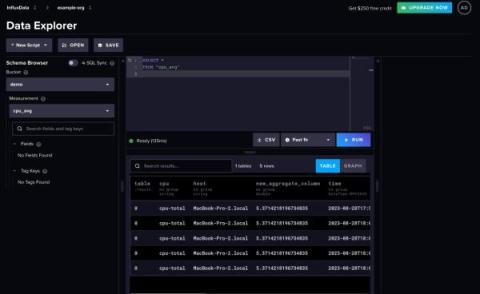
Any existing InfluxDB user will notice that InfluxDB underwent a transformation with the release of InfluxDB 3.0. InfluxDB v3 provides 45x better write throughput and has 5-25x faster queries compared to previous versions of InfluxDB (see this post for more performance benchmarks). We also deprioritized several features that existed in 2.x to focus on interoperability with existing tools. One of the deprioritized features that existed in InfluxDB v2 is the task engine.

Learning in public: How to speed up your learning and benefit the OSS community, too

Technical folks in OSS communities often find themselves in permanent learning mode. Technology changes constantly, which means learning new things — whether it’s a new feature in the latest OSS release or an emerging industry best practice — is, for many of us, simply a natural part of our jobs. This is why it’s important to think about how we learn, and improve the skill of learning itself.

Efficiently Tracing Zephyr Syscalls

Using Tracealyzer to view applications running on Zephyr RTOS comes with a special challenge: unlike some other microcontroller-oriented real-time operating systems, Zephyr exposes its kernel services via a syscall layer. A syscall is essentially a way to programmatically communicate with the operating system kernel from user level code.

Custom Management Packs - for your needs

Each organization's IT environment has its own prerequisites and unique challenges. This also means that there are different needs for the monitoring and automation of every organization's critical applications. However, finding a monitoring solution that fits your unique needs is not always easy. Especially if your organization has particular regulations and demands that need to be taken into consideration.

Continuous Improvement and Pure Excellence: Advantages of RCA in Troubleshooting

As a good technology superhero you will know that in the world of troubleshooting, there is an approach that goes beyond simply fixing superficial symptoms. We call this approach “Maximum Heroics” or Root Cause Analysis (ACR), a charming method that seeks to unravel the mysteries behind an incident. Through the RCA, the causal factors of an incident are examined, and why, how and when it happened are broken down in order to prevent it from repeating itself and ensure smooth continuity.

Monitor your mobile tests with Sofy's offering in the Datadog Marketplace

As your apps scale, testing can become repetitive, manual, and time-consuming, leading to slower release cycles and lower-quality code. Sofy is a SaaS platform that enables you to create and run automated tests on your mobile apps without writing any code. Sofy will automatically test your mobile apps on real iOS and Android devices, so you can optimize their performance and debug end-user experiences without setting up or maintaining your own test infrastructure.

The importance of SDT and how to successfully schedule planned downtime

Scheduled downtime (SDT), also known as planned downtime, lets you perform maintenance, testing, or repairs on your systems, servers, software, data centers, and other infrastructure. While no business likes being offline, this preventative work is essential for ensuring your assets function correctly. Unlike unplanned outages, you can limit downtime so it minimizes impact on your company and customers.