Operations | Monitoring | ITSM | DevOps | Cloud

Unlock Value from Your Data Anywhere: Connected Experiences .conf21 Highlights

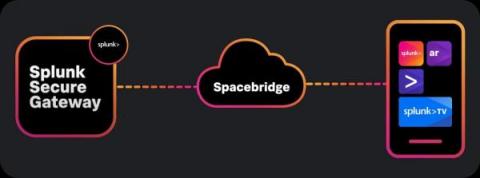
Are you ready to unlock value from your Splunk data, anywhere at any time? You might be itching to do this after seeing the amazing announcements made by the Splunk Connected Experiences team at.conf21. For those that might have missed it — or those that are hoping to learn more — we’ve rounded up the highlights below. Across each of the products, the takeaway is clear: we’re continuing to make it easier than ever to access your Splunk data in new and innovative ways.

Announcing New Splunk Infrastructure Monitoring Capabilities

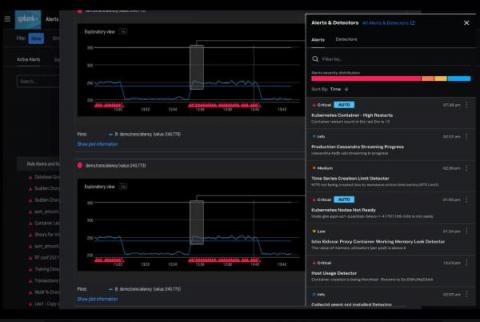
This year at.conf21, we announced exciting new features in Splunk Infrastructure Monitoring, our real-time streaming metrics-based monitoring platform. Our innovations help SRE and cloud operations teams detect and resolve performance issues even more quickly and efficiently while maintaining enterprise-grade security and compliance posture. In this roundup blog, we cover, in detail, all the product features we unveiled at.conf21.

What's New in OpenTelemetry: Community, Distributions, and Roadmap

I am honored to be able to talk about Splunk’s investment and commitment to the OpenTelemetry project. I would like to take this opportunity to talk about the latest in the OpenTelemetry community, as well as the instrumentation and data collection distributions available from Splunk. Be sure to read through the whole post, as you will find some roadmap information too!

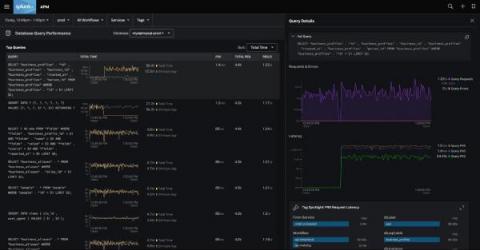
New: Optimize Slow Queries with Enhanced Database Visibility in Splunk Observability

Databases have always been the backbone of applications – both web and enterprise. Now, more than ever before, you need to know not just overall statistics about your database, but you must identify how database performance interacts with the network, operating system, servers, configuration, and even third party dependencies.

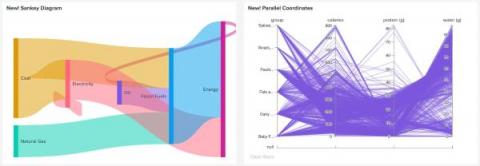
Dashboard Studio: New Features Highlighted At .conf21

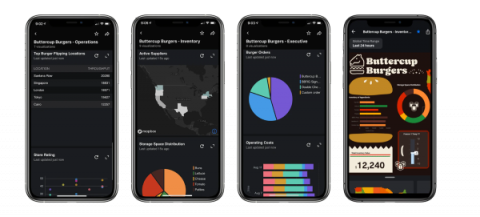
I am very excited that this year’s.conf21was the first.conf where we got to showcase Dashboard Studio, which has come built-in with every Splunk Enterprise and Splunk Cloud Platform release, since 8.2 and 8.1.2103, respectively. I am even more excited to share a packed list of new features in the 8.2.2109 release, which coincides with.conf21! This blog post will highlight a few capability areas we've been heavily focused on that will help you do even more with your dashboards.

Reducing the Carbon Footprint of the Manufacturing Industry with the Power of Data

As the world watches the UN Climate Conference unfold in Glasgow, the manufacturing industry is under increased pressure to reduce its CO2 emissions. Companies are stepping up to the challenge, but much more remains to be done to keep climate change under control. Digitalization is part of the solution. The Power of Data has much to offer such as environmentally friendly manufacturing, efficient logistics, improved building and energy management and optimized renewable energy production.

Why Use OpenTelemetry Processors to Change Collected Backend Data

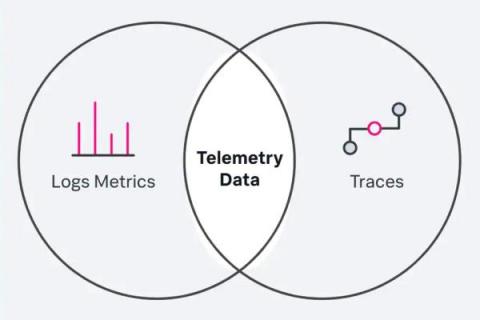
When managing distributed environments, we find ourselves challenged with looking for different ways to understand performance better. Telemetry data is critical for solving such a challenge and helping DevOps and IT groups understand these systems’ behavior and performance. To get the most from telemetry data, it has to be captured and analyzed, then tagged to add relevant context, all while being sure to maintain the security and efficiency of user and business data.

An Overview of Microsoft Azure Services

Microsoft Azure is the public cloud computing platform by Microsoft which offers software as a service (SaaS), platform as a service (PaaS) and infrastructure as a service (IaaS). It comprises more than 600 cloud services and supports varied operating systems, databases, and developer tools. And, even better, Splunk On-Call integrates with Microsoft Azure to help on-call teams improve incident response for Azure-based environments.

Common DevOps Roles and Responsibilities

DevOps-oriented engineers live at the intersection of IT operations and software development – understanding much of what it takes to maintain IT infrastructure while also being able to write code and deploy new services. DevOps-minded teams not only create services – but they also maintain them. A DevOps structure forces teams to take accountability for their applications and infrastructure instead of allowing developers to throw code over the proverbial wall to IT operations.

A CI/CD Template for Terraform

Continuous integration (CI) makes the cycle from design to code to building artifacts seamless and consistent. Continuous delivery (CD) makes delivery of that artifact to an environment the same every time. But, what about the actual environment the artifact is running in? Is it the same every time? That’s a hard thing to guarantee — unless you take advantage of an Infrastructure-as-Code (IaC) approach. This post explains how to use Infrastructure-as-Code to improve CI/CD.