This is the first in a series we’re calling AI ROI Dispatches, where we share stories from CloudZero and our customers on tying AI spend to real business outcomes.
Eight new Azure recommendation types now scan your environment for idle, unattached, and over-provisioned resources, then tell you exactly what to cut.
Platform engineering has become one of the most discussed topics in cloud native infrastructure. Yet despite the rising focus, most conversations around platform engineering skip over the uncomfortable truths. What actually works at scale? When should you build versus buy? And how do you avoid the traps that trip up even experienced teams?
AI has made writing code fast, and you can feel it. Commits are up, pull requests are up, new repos spin up over a weekend, and your engineers swear they are faster. But where are all the new products? If every team really got faster, the software you use every day should be getting visibly better. AI helped your engineers ship more code. It didn't help your team ship more products.
AI adoption has accelerated faster than most organizations expected. What started with chatbots has quickly evolved into AI systems capable of making decisions across enterprise environments, with the promise of faster service and more efficient teams. But many organizations are discovering an unexpected challenge: as AI usage expands, costs become harder to predict. Most AI platforms operate on token-based pricing models.
A malfunction in the baggage handling system at Berlin Brandenburg Airport disrupts the conveyor network that transports luggage across the airport. With more than 70,000 passengers traveling through BER every day and flight schedules timed down to the minute, even a small disruption can quickly lead to delays, missed connections, cancellations, and high costs. Fortunately, the Incident Management team receives the alert in real time and responds immediately.
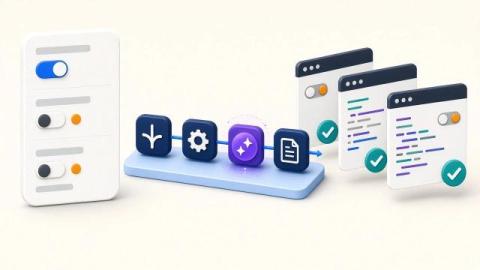
When you’re building with AI, you can get a lot done in 30 seconds. Waiting minutes for CI feedback on your latest change can feel like an eternity. Chunk sidecars are designed to give you feedback fast, running your full test suite against the same Linux environment as CI, directly inside the agentic loop. Traditional CI pipelines can take five or ten minutes to catch a basic lint error or failing unit test.
The conversation about AI and software development has mostly been about velocity. Developers write code faster. Pull requests ship sooner. Backlogs shrink. That part is real, and it matters. But there's a bigger shift happening underneath it, and most engineering leaders I talk to are only just starting to feel its weight. AI hasn't just made developers faster. It has fundamentally expanded who can create and ship software. That changes things in ways that velocity metrics don't capture.
Canonical Livepatch now officially supports Arm64, further expanding its security patching automation capabilities. For the first time, Ubuntu on an Arm64 machine can apply critical kernel updates, without service interruption or rebooting. Starting with Ubuntu Core 26 for Arm64, and for Ubuntu Core 20 and onwards for AMD64 machines, a wider range of devices and cloud virtual machines can achieve timely vulnerability remediation through Canonical Livepatch.
Virtual reality places users inside systems rather than in front of them. That difference changes how failures are perceived. In most web or mobile applications, inconsistencies are softened by interface boundaries, navigation flows, or simple reloads. Users subconsciously accept that what they see may lag behind what is happening elsewhere. VR does not offer that distance.