If you pick a random SaaS company out of a jar and go to their website, chance are they integrate with another tool. Typically, the end goal of integrations is to meet users in the middle by working with other tools they’re already using on a day-to-day. Put another way, integrations are a strategic business decision. But the question remains: why don’t companies just build a tool with similar functionality in order to make the product stickier?
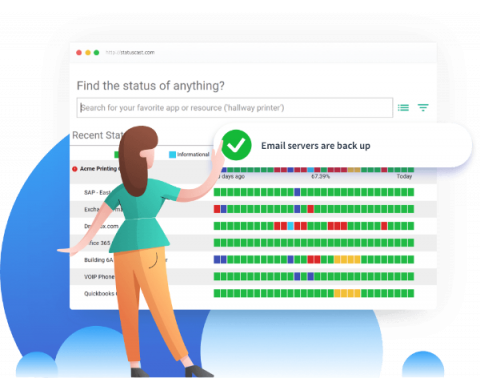
Servers are down. Employees are scrambling. Customers are upset. The pressure is on. When internal operations are in disarray, and your business is experiencing a service outage, the last thing you need to worry about is the reliability of your incident communication solution. Keeping users informed when services are down is mission-critical, in order to prevent a flood of support requests, which compound the effects of the incident, straining employee productivity and bandwidth.
We're proud to announce we have added a new check to our service: Lighthouse SEO. Using this check you can detect (and get solution suggestions) for SEO and performance problems.
Azure native services are cloud-based solutions that are developed, managed, and supported by Microsoft. These services are designed to help organizations build and deploy applications on the Azure cloud platform, and take advantage of the scalability, security, and reliability of the Azure infrastructure. In this blog post, we’ll take a look at some of the key Azure native services that are available, and how they can be used to build and run cloud-based applications.
Before we jump into cloud cost optimization, let us address the elephant in the room. Businesses are moving to the cloud but are struggling with unpredictable cloud bills. If you are a business owner who has moved to the cloud recently, you need to understand each cloud touchpoint and get a transparent view of your cloud services. When it comes to cloud cost optimization, there are many tools and techniques that organizations can adopt. Most of these can only take you so far.
The System Administrator! AKA the Sysadmin. The keeper of the network, computers – well basically all things technology. The one who is hated for imposing complex passwords and other restrictions, but taken for granted when everything works well. They are the first to be called when “facebuuk.com” reports: “domain does not exist”.