One of Icinga’s greatest strengths is its ability to integrate with other systems and use those systems’ data to enrich monitoring. It can write time-series data to InfluxDB, Graphite or even Prometheus with our icinga2-exporter. It can talk to different data sources so that hosts and services can be created and managed automatically. This means that lots of manual work is eliminated.
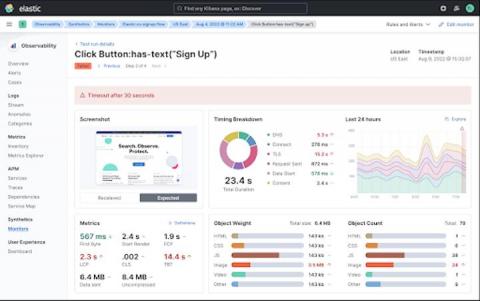
From its inception as a powerhouse for logging, Elastic Observability has grown into a comprehensive solution for full-stack multi and hybrid-cloud observability. Given the increasing complexity of the cloud-native world, the major challenge for observability is twofold: getting deeper and more frictionless visibility at all levels of applications, services, and infrastructure, and making sense of the overwhelming amount of data that is available.
The Cambridge English Dictionary defines a silo as “a part of a company, organization, or system that does not communicate with, understand, or work well with other parts.” Siloing can exist at various organizational levels: siloed departments, siloed teams within a department, and even siloed engineers within a team. In any industry, siloing can cause issues with alignment, communications, and overall delivery, but in fintech, there are additional risks.
Debugging is an unavoidable part of software development, especially in production. You can often find yourself in “debugging hell,” where an enormous amount of debugging consumes all your time and keeps the project from progressing. According to a report by the University of Cambridge, programmers spend almost 50% of their time debugging. So how can we make production debugging more effective and less time-consuming?
3DS OUTSCALE aims to provide local cloud services with global reach.
For an organization to prevent cyberattacks, it first needs complete visibility into all the events that occur within its network. With this visibility, the organization can analyze risky behavior by users and entities, and take the necessary steps to proactively secure itself. However, if an attack were to still happen, the organization again needs complete visibility to identify how and from where the attacker entered the network.
We talk a lot about business services and how to keep them running at peak efficiency, but every now and then these questions arise: what exactly is a business service, how can I provide the best possible experience to my users, and how does it affect the performance of my IT estate?