Operations | Monitoring | ITSM | DevOps | Cloud

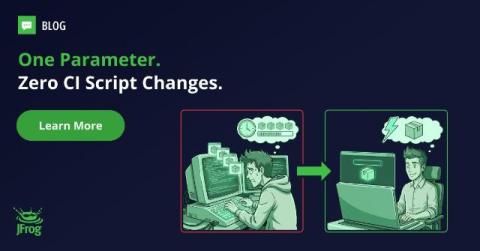
How to Use JFrog CLI Without Editing Your CI Scripts

Using JFrog CLI used to come with a catch. To run a build through it, you had to put it in front of the command. For example, jf npm install instead of npm install or jf mvn package instead of mvn package per the example below: npm install → jf npm install mvn package → jf mvn package Doing that once is easy enough.

The real cost of your dependency on hyperscalers

There's a version of cloud strategy that looks like a decision and a version that looks like drift. Most enterprises are living the second version. AWS won an early workload because the team knew it. Azure followed the Microsoft enterprise agreement. GCP came in through a data science team that preferred its ML tooling. Nobody chose concentration; it just accumulated.

AI ROI is not an engineering metric

I spend most of my week talking to companies about AI ROI. A few months ago, that was still a weirdly specific conversation. Now it’s everywhere. CloudZero spends a lot of time in that conversation, so I’m glad the market is talking about it. But the conversation tends to start, and stall, in the wrong place. There are two ideas I keep coming back to: That doesn’t mean developer productivity is fake. It’s very real.

DevOps Toolchain Explained: How to Build One That Actually Scales | Harness Blog

A DevOps toolchain that scales is the smallest unified stack with central governance and golden paths, not the longest list. 71% of teams say context-switching drains productivity; 73% of leaders report barely any teams have golden paths (Harness). AI coding speed stresses the after-code stages where DevOps toolchain sprawl creates the biggest governance gaps. Unified platforms keep governance, verification, and rollback consistent as AI raises code volume entering the pipeline.

Feature Flag Security in your CI/CD Pipeline | Harness Blog

Incorporating robust security measures into feature flag management is critical to protecting sensitive data and maintaining compliance. Harness FME security features, like remote evaluations in Thin SDKs and governed AI flag cleanup, let you practice security by design and standardize solid security practices across your teams.

Engineer Gleb Lesnikov on Why Splitting a Monolith into Microservices May Sink Your Business

Gleb Lesnikov has been developing the system behind Dodo Pizza, an international fast-food chain, since joining the company in 2015. Over the years, the local business turned into a company running over 1,600 restaurants. When Dodo expanded rapidly, Gleb had to take key technical decisions that allowed the company to scale and succeed. Looking back, he reflects on the period when the company moved to a microservices architecture and explains how he managed to solve problems that could have caused the company to collapse.

7 Code Review Practices That Prevent Technical Debt: Softalium Limited's Framework

Technical debt is one of those problems that's easy to understand in the abstract and genuinely painful to manage in practice. Every software team knows what it is - the accumulated cost of shortcuts, quick fixes, and decisions that made sense in the moment but created future work. What's harder to internalize is how quickly it compounds. McKinsey research found that technical debt accounts for approximately 40% of IT balance sheets, with companies diverting an additional 10-20% of their technology budgets just to manage it.

Jasiri Limited's 4-Stage Approach to Regression Testing in Agile Sprints

A trapeze artist does not perform the difficult part of the act without a net strung underneath. The net does not make the trick any easier. It makes attempting it survivable, which is the only reason anyone dares to let go of the bar. Jasiri Limited thinks about regression testing in much the same way. In a fast sprint, the temptation is to move quickly and assume nothing already working will break. The testing is the net that makes moving quickly survivable, and the company builds its approach by starting from the outcome and working backward.

The Best AI App Builders for Small Businesses in 2026

TL;DR: The best AI app builder for small businesses in 2026 is Jotform AI App Builder for end-to-end workflow automation. Lovable is best for customer-facing web apps, Softr for portals, Glide for field operations, Adalo for native mobile apps, and Base44 for custom AI web apps. Small businesses rarely need an app in the abstract. They need a faster way to handle bookings, orders, client intake, approvals, inspections, payments, documents, and follow-up.

Customer Retention in a SaaS World: What Ops Teams Can Learn From Old-School Personal Touches

Software retention is usually described in the language of metrics: net revenue retention, logo churn, product adoption curves, health scores that turn green or red on a dashboard. All of it is useful. None of it is the reason a customer decides to stay. People renew contracts, but people also remember how a company made them feel at the three or four moments that actually mattered - the botched onboarding that someone personally rescued, the renewal that arrived with a real thank-you instead of an invoice, the support ticket answered by a name rather than a queue.