Operations | Monitoring | ITSM | DevOps | Cloud

The 4 AlmaIQ Use Cases That Reduce Demand for Technical Support

Gartner predicts that, by 2029, active AI will be able to autonomously resolve 80% of common customer service issues, reducing operational costs by around 30%. This scenario reinforces the need to move from a reactive model to proactive strategies that prevent incidents from arising, especially Level 1 incidents, which account for a large share of service desk volume.
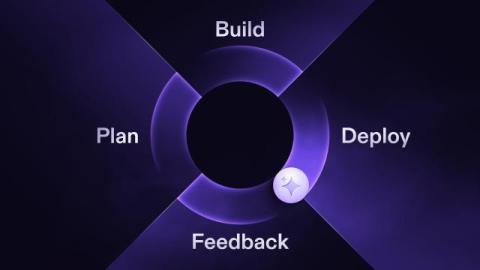
What is an AI software factory?

Ask a software engineer what they do and the answer, for years, has been some version of "I write code." That assumption is unwinding fast. AI agents can now write code, review pull requests, run tests, and ship to production, and they're taking on a fast-growing share of that work. As agents absorb more of the execution, the human role shifts.

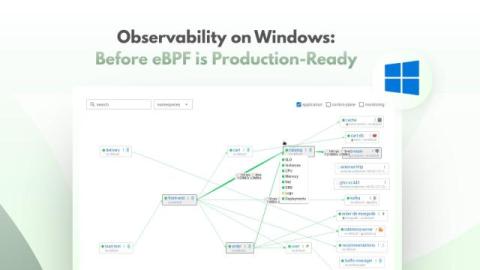
Observability on Windows, before eBPF is production-ready

No large enterprise runs a single stack. A shiny new Kubernetes cluster sits right next to a Windows Server box that has quietly run the billing system for a decade without missing a beat. Both keep the business running. Both deserve the same visibility. Linux runs most server workloads, and Coroot grew up there. Our open-source node-agent uses eBPF to collect metrics, logs, traces, and profiles, with no code changes. But "most" is not "all".

How High-Performance IT Organizations Prevent SLA Exposure Before It Becomes a Customer Disruption

Over the past decade, significant progress has been made in incident detection and response across enterprise IT environments. Observability platforms, event correlation engines, and AIOps capabilities have measurably reduced mean time to detection and mean time to resolution. Operational teams are better equipped to identify anomalies, triage alerts, and coordinate remediation across increasingly complex architectures.

Stop Treating Coding Agent Plugins Like Settings: Introducing Agent Plugins Repositories

Your developers install agent plugins every day: pulling from unmanaged GitHub repos, copying Cursor commands out of Slack, pointing Codex at a personal Git fork. Each of those is a new, uncontrolled distribution channel inside your software development lifecycle, and your platform team has zero visibility into any of it. A plugin is not a preference file. It is executable software, and right now it’s arriving on developer machines with no versioning, no provenance, and no audit trail.

How to migrate feature flags without breaking production

Feature flag migrations have a reputation problem. Ask anybody who’s been through one before and you’ll hear the stories, usually from someone still a little frustrated about a bad cutover, with a postmortem or two to show for it. The reputation is mostly undeserved. While the risks are real, they’re well understood and easily controlled. Getting a migration right doesn’t require a big coordinated effort.

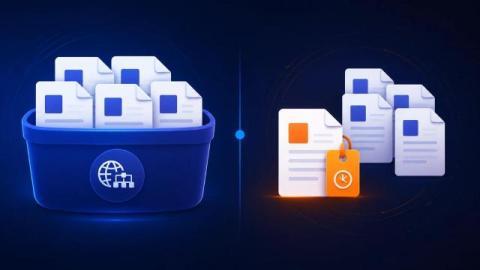
Retention Policies vs Retention Labels in SharePoint (2026): The Difference Admins Constantly Get Wrong

Retention policies apply to locations. Retention labels apply to items. Both live in Microsoft Purview, both retain content, and admins regularly use the wrong one. What each actually does and when to use which.