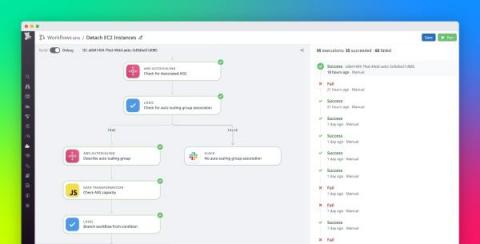
Developer, SRE, IT, and security teams often perform complex and error-prone processes in response to disruptions and changes in their systems. Relying on these processes requires a significant amount of time switching between tools to gather the relevant context needed for remediation, domain expertise, and the manual execution of tasks for incident management—which can significantly prolong disruptions and downtime.
Businesses rely on software solutions increasingly in our modern age, and it’s constantly evolving. Compared to some of the software being used in the early 2000s, we’ve seen large changes, resulting in more complex frameworks, which come with their own unique changes. As software and systems become more complex, so increases the probability of errors occurring and the level of jeopardy those errors might present.
The concept of observability centers around collecting data from all parts of the system to provide a unified view of the software at large. Fault tolerance, no single point of failure and redundancy are prominent design principles in modern software systems. But that doesn’t mean errors, degradation, bugs or even the occasional catastrophe don’t happen.
Martin and Jess recently conversed with Todd Gardner of RequestMetrics as part of the O11ycast podcast. We don’t normally write blogs based on these conversations, but there were impactful comments in that episode that bear repeating. You can listen to the full conversation if you wish. Let’s get into it!
Office 365 is used by more than one million companies around the world. Business employees count on these apps constantly to do their jobs, whether they’re writing documents, updating spreadsheets, building slides, or checking email. While cloud-based apps like Office 365 offer undeniable advantages for enterprises and business users, they also create tough challenges for IT operations and network operations (NetOps) teams.
HTTP/3 is the latest generation of the HTTP protocol, and its ability to serve applications over QUIC offers several advantages for user experience, including reduced latency, improved reliability, and faster page loading as a result of fixing the head-of-line blocking issue in previous versions of HTTP. Both HAProxy and HAProxy Enterprise offer support for using HTTP/3 over QUIC, although the steps for enabling QUIC in HAProxy and HAProxy Enterprise are different.
Choosing the right website platform is an important decision for anyone looking to establish a solid online presence. In fact, choosing the wrong website platform has exposed brands to issues like security breaches, poor mobile responsiveness, and terrible load speeds. To buttress the last point, Google research showed that 32% of users would leave your website if it experiences poor load speed. In other words, they want a good user experience.