Internet-of-Things (IoT) devices and technologies have penetrated into our life. Nowadays, we can easily find IoT devices around us. Home appliance manufacturers produce IoT products for smart homes. Car makers invest in smart vehicles that can communicate with other smart cars and IoT objects nearby. Governments allocate huge resources to build smart cities with IoT technologies to improve the quality of life for people and promote economic growth.
Before we dive into the specifics of each alternative to Datadog, let's address the most critical point: scaling. Datadog is great for users who need to do a little bit of everything, but Datadog's biggest weakness is scaling. Datadog can do logs, APM, time series and more, but scaling time-series metrics, alerts, and servers will cause your monthly bill to escalate. The graph below shows what you pay at Datadog vs. MetricFire, a leading competitor.
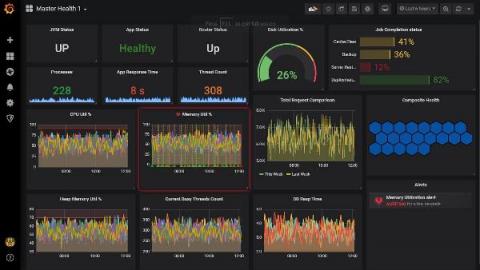
IoT devices open the door to all sorts of computing potential, but they can also produce a flood of telemetry data that users need to properly collect and monitor to ensure those devices are working properly. It’s no wonder so many individuals and businesses use Grafana for IoT use cases, whether they’re starting an aquaponic farm in South Africa, managing an industrial-scale electroplating factory in Ohio, or simply keeping tabs on Pretzel the python at its home in the UK.
We talk with numerous teams that want to improve their engineering performance. Here, we explain how to accelerate your progress using DORA metrics — a set of key performance indicators that can help you measure and optimize your team's software development process. You'll learn practical tips on how to leverage these metrics to achieve faster and more efficient team improvement. But first, you'll need your team to see the value in DORA metrics.
Elastic Stack provides many valuable insights for different users. Developers are interested in low-level metrics and debugging information. SREs are interested in seeing everything at once and identifying where the root cause is. Managers want reports that tell them how good service performance is and if the service level agreement (SLA) is met. In this post, we’ll focus on the service perspective and provide an overview of calculating an SLA.