Operations | Monitoring | ITSM | DevOps | Cloud

Code Review Platforms That Reduce PR Bottlenecks

Pull request queues keep growing, reviewers lose context between rounds of feedback, and merges stall for days. If your team’s code review process has become a bottleneck instead of a quality gate, the tooling around it may be the real issue. GitKraken gives you a unified code review workspace that cuts through noise and surfaces meaningful changes so reviewers focus on what matters.

Improvise your Operational Readiness Testing (ORT) with Harness

Most Operational Readiness Testing (ORT) programs follow the same ritual. A checklist gets filled out. Someone runs a load test in a war room the week before launch. A failover drill gets scheduled, and everyone hopes it goes cleanly. Then the release is shipped and testing is done. But with Harness you can make this process continuous and your services resilience is protected with the same ORT check list with every small change that is happening in your SDLC.

IT Service Management for Government and Public Sector Organizations

What happens when a citizen-facing portal fails on the last day of a filing deadline, and the only record of the outage lives in an email thread between two engineers? In a commercial organization, that is an operational embarrassment. In a government department, it is a hole in a statutory record that an auditor will eventually ask about.

PCI DSS Requirement 10: Logging and Monitoring in v4.0.1

Version 4.0 renumbered PCI DSS Requirement 10 from end to end, and the Council retired v3.2.1 on 31 March 2024. Sub-requirement numbers written before then mostly point somewhere else now. Four more Requirement 10 rules changed status on 31 March 2025, automated log review among them. Checking your numbering against v4.0.1 costs an afternoon and saves a finding. In this blog, you will: PCI DSS Requirement 10 covers audit logging and monitoring across the cardholder data environment.

Wide Events vs. Three Pillars: AI Observability Costs

As agentic AI workflows gain traction within organizations, those organizations are asking how to account for their behavior while keeping costs manageable. Some are sticking with the old three pillars of observability approach: take a measurement to create a metric, record output to a log, and track serial progress with a trace. Each of these is useful, but treating them as distinct formats from the start means paying for them distinctly too. Separate storage doesn't come cheap.

How to move photos to cloud storage easily, securely, and privately

If you have a large collection of photos you don’t know what to do with, and need a fast, efficient way to store and keep your memories protected, then cloud storage may be the option for you. Moving your photos to cloud storage is a simple way to store, back up, and manage your photo library without relying only on your phone, computer, or physical storage devices. But how do you move photos to the cloud, do your photos automatically get backed up, and how much cloud storage do you actually need?

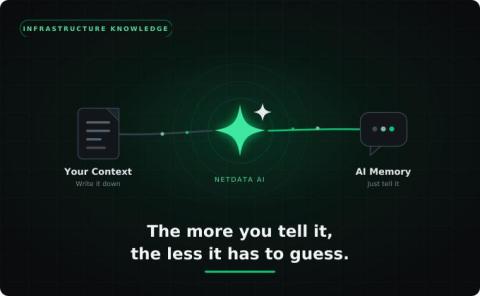
Introducing Infrastructure Knowledge: Teach Netdata AI What Your Metrics Can't Show

Netdata AI sees everything your infrastructure does: every metric, every anomaly, every alert. It does not see what your infrastructure is: which services matter, which host is supposed to run hot, who owns what, what your team considers normal. Without that context, “CPU at 91%” is just a finding. With it, it might be a machine doing exactly its job.

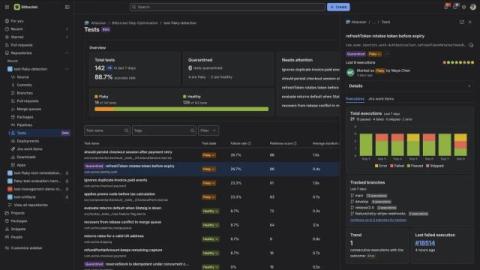
Monitor test health at a glance in Bitbucket Tests

When a team relies on automated tests in CI/CD, knowing that tests ran is only the beginning. Understanding whether the suite is healthy, which tests need attention, and how a specific test has behaved over time — that’s what drives action. Bitbucket Tests is evolving to make those answers easier to find and give you tools to improve your test health.