What is OpenTelemetry?
OpenTelemetry expands observability to help you achieve business goals.


The latest News and Information on Log Management, Log Analytics and related technologies.
The community has spoken, six Helm charts is not enough! We agree! In all seriousness though, six charts is simply too many to maintain. And while it might sound counterintuitive, that’s why we are announcing a new Helm chart. By focusing on the “Grafana Labs way" to run Grafana Loki using Helm, we believe this will help us and the community concentrate our Helm efforts into a single chart. This new chart is released under grafana/loki at Helm version 3 or higher.
We’re pleased to announce that Elastic has been named a Leader in the 2022 Gartner® Magic Quadrant™ for Insight Engines. This is our second year of inclusion in the Gartner Magic Quadrant for this category, and this year’s evaluation places Elastic as the furthest entry on the "Completeness of Vision" axis.
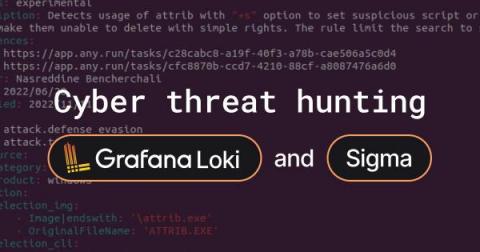
Fact: The Security Operations team at Grafana Labs loves logs. They are a key pillar of observability for many reasons, such as how they are stuffed full of details to help us diagnose the “why?” when things go wrong. This is especially true when the information pertains not to a series of unfortunate events, but instead to an adversary trying to cause us harm.
As an observability provider, we are always confronted with our clients’ goal for faster resolution of problems and better overall performance of their systems. By working on large-scale projects at Logz.io, I see the same main challenge coming up for all: extracting valuable insights from huge volumes of data generated by modern systems and applications.
We’re excited to announce significant improvements to our Archive+Restore capabilities – which enables low-cost long term log storage in AWS S3 or Azure Blob, while providing access to ingest those logs into Logz.io at any time. The first enhancement is Power Search, which will make it faster to restore logs from archived log data in AWS S3 (and soon for Azure Blob) in our Open 360™ platform.