The latest News and Information on CyberSecurity for Applications, Services and Infrastructure, and related technologies.
As more companies adopt SaaS services over on-premise delivery models, there is a natural concern around data security and platform availability. Words on a vendor’s website can provide insights to prospective customers on the process and policies that companies have in place to alleviate these concerns. However, the old adage of “actions speak louder than words” does apply. Trust in a website’s words only goes so far.
Zero trust is a security model to help secure IT systems and environments. The core principle of this model is to never trust and always verify. It means never trusting devices by default, even those connected to a managed network or previously verified devices. Modern enterprise environments include networks consisting of numerous interconnected segments, services, and infrastructure, with connections to and from remote cloud environments, mobile devices, and Internet of Things (IoT) devices.
Cybersecurity is a key priority for small, medium, and large companies. If you are a keen internet user or a lover of news and trending topics, I am sure you already know the current threats surrounding the cybersecurity realm. Cybersecurity threats are now a nightmare that faces all levels of organizations. Malware attacks, DDoS threats, phishing, brute force, SQL injections, etc. are running riot in the internet streets.
With the continued focus in our space on the movement from MSP to MSSP, it’s crucial to remember that products alone don’t necessarily make you an MSSP. For smaller customers, although you might be able to provide a range of security solutions (like EDR and backup) and compliment these with an RMM to provide insight and control over end user devices, this is not enough to call yourself an MSSP.
Logz.io recently obtained the Amazon Web Services (AWS) Security Competency for our Cloud SIEM. We are thrilled to support the re-launch of the AWS Security Competency, as clearly the only way to combat today’s cybersecurity challenges is to modernize your analytics platform to respond to today’s evolving threat landscape.
GitHub is one of the most popular source control platforms available. It relies on Git concepts, and millions of developers use it. GitHub Actions embrace all aspects of what source control needs, such as branching, pull requests, feature flags, and versioning. It also integrates nicely into third-party continuous integration and continuous development (CI/CD) pipelines or deployment tools like Azure DevOps, Jenkins, GitLab, and Octopus Deploy.
Consumers expect their personal information to be safe in your hands as they use your apps, services, and stores. Even in-person retailers collect customer data for loyalty programs, shopping history, and more. In addition, regulators and auditors — and while we’re at it, let’s add investors, board members, and partners to the list of people who expect all customer data to be secure at all times.
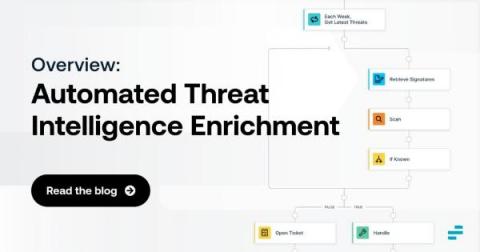
Discovering security threats is good and well. But, in many cases, simply knowing that a threat may exist is not enough. Instead, you also need threat intelligence enrichment. Threat enrichment plays a critical role in helping to evaluate and contextualize threats, root out false positives and gain the insights necessary to mitigate risks as efficiently and quickly as possible.
The Software Development Lifecycle (SDLC) framework defines the entire process required to plan, design, build, release, maintain and update software applications, including the final stages of replacing and decommissioning an application when needed. A Secure SDLC (SSDC) builds on this process, integrating security at all stages of the lifecycle. When migrating to DevSecOps (collaboration between Development, Security, and Operations teams), teams typically implement an SSDLC.