Operations | Monitoring | ITSM | DevOps | Cloud

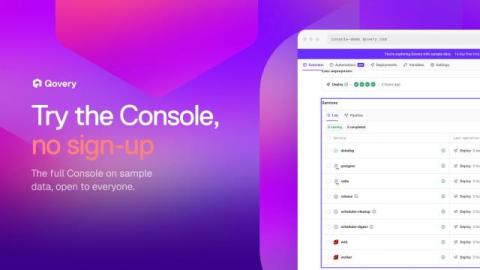
Try the Qovery Console Without Signing Up

The Qovery Console demo is open to everyone at console-demo.qovery.com. No account, no credit card, no cloud credentials: the full Console on sample data, with seven short product tours. Romaric founded Qovery to make Kubernetes accessible to every engineering team. He writes about platform strategy, developer experience, and the future of cloud infrastructure.
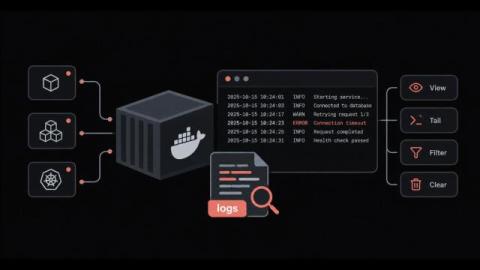
How to View, Filter and Manage Docker Logs Without Losing Them or Filling the Disk

Why does a container fail, restart and leave behind almost nothing useful when you go looking for the cause? Docker logs are the first place most engineers check during an incident, and they work well right up until the output goes missing. Sometimes it is buried under thousands of lines, and sometimes it is deleted along with the container. The docker logs command itself is simple. The difficulty comes from the settings around it, starting with the logging driver and where its files live on disk.

Antivirus scanning with CFEngine and ClamAV

Is the antivirus on your servers working correctly right now? Installing ClamAV takes a single command. The hard part is keeping it running on all servers, since freshclam fails without indicating a problem, cron jobs disappear, and no one notices until an audit. The new ClamAV module deals with this by ensuring that ClamAV remains operational on all hosts and also indicates to you in the Mission Portal when it isn’t.

Observability Lessons NVIDIA and CoreWeave

The best thing that can happen to an open-source project is to find its way into some of the world’s largest technology companies. In September 2026, this happened twice in one week: VictoriaMetrics is now officially bundled in the self-managed edition of NVIDIA’s Cloud Functions, and I learned that CoreWeave is using VictoriaMetrics as the metrics backend for all of its infrastructure customers. Both companies adopted VictoriaMetrics independently.

IT Internal Audit: Checklist, Process, And Best Practices

An IT internal audit is a structured review of an organization's technology systems, processes, and controls to evaluate their effectiveness. It spans hardware inventory, software and licenses, access controls, IT policies, Change Management, and vendor contracts. This guide covers what an IT internal audit includes, how it differs from an external audit, and the six phases of the process, including physical verification of the inventory.

YouTube Let AI Prototypes Read Production. The Token Did the Work.

TL;DR: Google Cloud’s post of 22nd July 2026 on why AI apps fail in production describes how a YouTube team gets AI prototypes in front of user research in weeks instead of quarters: a prototyping stack that hands each prototype read-only access to live production data through a proxy, keeps its code out of the production binary, and throws the prototype away once the idea is proven.

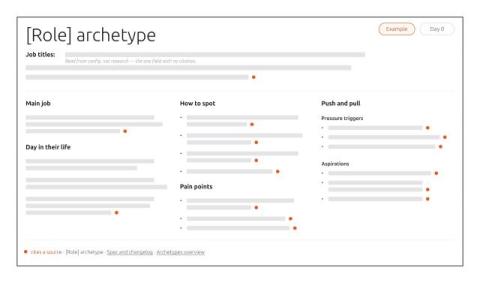
From personas to archetypes: a living, shared understanding of the people we build for (Part 1 of 2)

Personas are easy to create but often ignored. This is the first of two posts about how we developed archetypes to keep our personas fresh at Canonical. These are shared, machine-readable descriptions of our users that multiple teams and their agents can use. This post explains the system, its purpose, and its structure. The second post’ll cover how we maintain and update it. Personas should be functional tools.

Unable to get local issuer certificate, explained

Your site loads in Chrome fine. Then a deploy script, a webhook, or integration calls the same URL and gets this: Python says certificate verify failed: unable to get local issuer certificate. Node says unable to get local issuer certificate, or unable to verify the first certificate. It’s all the same problem. It’s a misconfiguration between your certificate and a trusted root. Either the server isn’t sending it, or the client doesn’t have it.

6 improvements that make Grafana Assistant better at helping your workflows

When you ask Grafana Assistant to build a dashboard or investigate an alert, you're doing so because there's work to be done. To do that work effectively, you need the right data, changes you can inspect, and conclusions supported by evidence. You also want Assistant to avoid mistakes and act quickly. Over the past six months, our team has worked hard to improve what makes those outcomes possible.