Operations | Monitoring | ITSM | DevOps | Cloud

Running Production with Agents w/ Rootly AI, NVIDIA, Replit, PostHog, & WorkOS

AI agents are writing code, investigating incidents, and changing how infrastructure teams work. For SREs, that brings new questions about reliability: when to trust an agent, how to catch its mistakes, and who owns the outcome. ​The panel ​Tim Glaser - Co-founder and CEO at PostHog​Michael Grinich - CEO and Founder at WorkOS​Vishakha Sadhwani - Sr. Solutions Architect at NVIDIA​Niall O’Higgins - Engineering Lead at Replit​Sylvain Kalache (Moderator) - Head of AI Labs at Rootly AI.
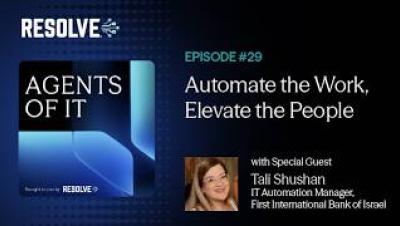
Automate the Work, Elevate the People

In this episode, Fran Fernandez and Zack Austin invite Tali Shushan, IT Automation Manager at First International Bank of Israel, to the studio to explore how automation can give time back to IT teams and fundamentally transform the way work gets done. Tali explains why successful automation starts small, why teams should measure outcomes in time rather than tasks eliminated, and how AI and automation can work together without removing humans from the equation.

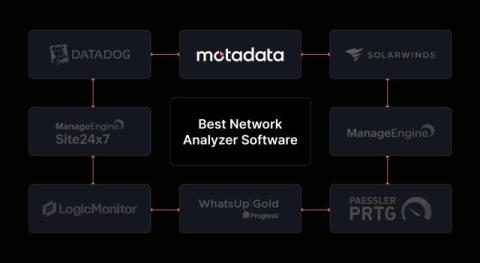
8 Best Network Analyzer Software in 2026

Does your IT team know which applications, users, or devices are consuming the most network bandwidth? A video call freezes, file transfers slow down, or a network link becomes congested. Without traffic analysis, finding the source of the problem can take hours. Network analyzer software helps your IT team: However, tools differ in how they collect traffic data. Some analyze flow records, while others also inspect packets to provide more detail.

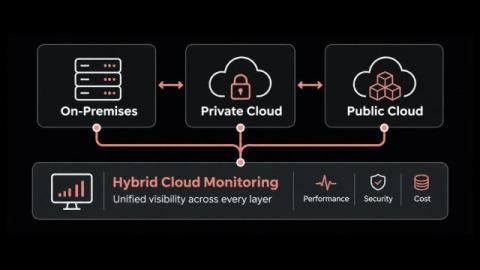
Hybrid Cloud Architecture: Components, Models and How to Monitor It

Why does an application that runs well in the data center slow down once one of its tiers moves to AWS or Azure? Often the servers are healthy and the cloud console shows no faults; the delay lives in the connection between them, where neither view reaches. That blind spot shows up in familiar ways: So these are design problems before they are operational ones.

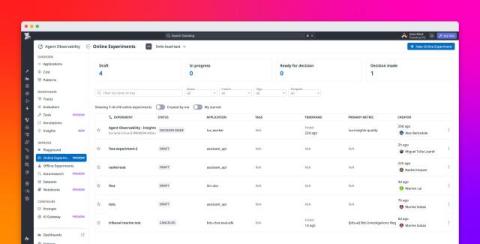
Compare AI agent changes with Online Experiments in Agent Observability

Improving an AI agent often involves changing its prompts, models, retrieval methods, or tools. But determining whether those changes actually improve performance can be difficult. A revised prompt might produce better answers for a handful of test cases but perform poorly on unexpected user requests. A cheaper model might reduce token costs while introducing tool-calling errors or longer execution times.

Kubex Agentic AI Platform: Secure Context at the Edge

Table of Contents In Part 1: Agentic AI at Scale – Building the Kubex Agentic AI Platform of this series, we laid the foundation for scaling agentic AI across cloud infrastructure. We examined why traditional ops workflows get stuck in reactive loops of dashboard watching, why static context limits intelligence, and how the Kubex platform uses context engineering and a distributed nervous system to bridge the gap between telemetry and deterministic actions.

Kubex Included in Forrester's Cloud Cost Management and Optimization Solutions Landscape, Q3 2026

A vendor saying it plays in a market is one thing. A respected independent research firm saying so is another. That’s why I’m pleased to share that Kubex has been included in Forrester’s The Cloud Cost Management And Optimization Solutions Landscape, Q3 2026.