Operations | Monitoring | ITSM | DevOps | Cloud

Evolving from Splunk IT Essentials to Predictive IT Management with Splunk IT Service Intelligence

This video describes the value Splunk IT Essentials Work provides organizations that are just getting started with using Splunk for common IT tasks and use cases, as well as the benefits of quickly evolving to predictive IT and service management with Splunk IT Service Intelligence when you’re ready.

CI/CD and state management for Flutter apps with MobX

MobX is a scalable library developed to ease the process of state management in frontend applications. In this tutorial, you will learn how to manage the state of your Flutter applications using MobX, and then set up a continuous integration/continuous deployment (CI/CD) pipeline for your application using CircleCI. You can find the sample project developed for this tutorial in this GitHub repository.

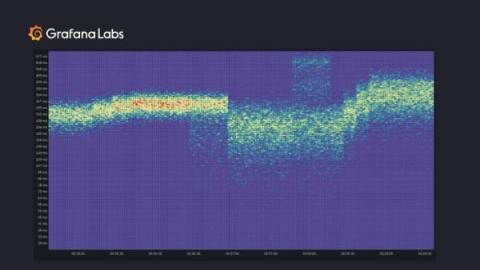
How sparse histograms can improve efficiency, precision, and mergeability in Prometheus TSDB

Grafana Labs recently hosted its first company-wide hackathon, and we joined forces with Björn “Beorn” Rabenstein to bring sparse high-resolution histograms in Prometheus TSDB into a working prototype. The Prometheus TSDB has gained experimental support to store and retrieve these new sparse high-resolution histograms. At PromCon 2021, we presented our exciting, fresh-off-the-presses results from the ongoing project.

Five Kubernetes Deployment Best Practices (Part 2)

In our previous post , we focused on tips for making the transition and migration to Kubernetes a smoother, and less painful process. In this post, we’d like to now provide some tips from the operational trenches for future-proofing your Kubernetes operation, after making the move. Kubernetes, as a software-driven system, has many benefits for engineers and DevOps teams to take advantage of.

Four Best Practices to Migrate to Kubernetes (Part 1)

Kubernetes has evolved into the leading platform to build your microservices systems. Given its increased maturity over the past few years as well as the robust ecosystem which has been built around its technology, Kubernetes has become more production-ready than ever. Nevertheless, it still has its own unique set of challenges. In particular, it brings a lot of complexity into play with its adoption.

New Events and Jobs Pages on Interrupt

François, Chris, and I started Interrupt 2.5 years ago because we wanted a repository of great embedded firmware content, which didn’t exist. Looking back at all the posts that our community contributors have published, we think we’ve made a respectable attempt at this goal. Our goals for Interrupt were always more ambitious than just a blog with quality content. We wanted Interrupt to become a hub for everything related to embedded firmware.

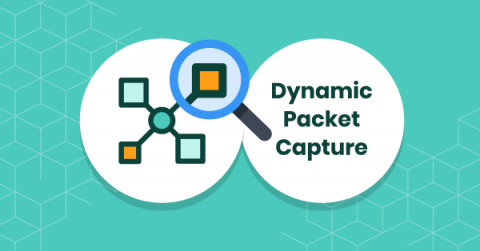
Fast and simple troubleshooting with GUI-based Dynamic Packet Capture

With the Calico 3.10 release, Dynamic Packet Capture is available in Dynamic Service Graph. This means users who require self-service, live troubleshooting for microservices and Kubernetes workloads can capture and evaluate traffic packets on endpoints without writing a single line of code or using any 3rd-party troubleshooting tools. Users don’t need to learn about or have knowledge of kubectl or YAML to troubleshoot their microservices and Kubernetes cluster.

Remote Work is Here to Stay. Learn How Ivanti Can Help Take the Pain Out of It.

Today many enterprise businesses suffer from security attacks but don’t understand how to protect their applications from being exposed. The most common attacks today are simple to execute such as a SQL injection, network Distributed Denial of Service (DDoS), Cross Side Scripting (XSS) and more. These are common attacks that can be mitigated by setting up a security framework to protect enterprise assets.