Operations | Monitoring | ITSM | DevOps | Cloud

How HAProxy built its modern application delivery architecture

Let’s be real: building reliable tech products is hard. Modernizing that same tech without compromising the user experience is even harder. The "rip and replace" approach to modernization can severely disrupt your customers’ integration efforts and workflows. When it doesn’t work, reversing course might be the least-worst option. By contrast, the evolution of the HAProxy One application delivery platform architecture at HAProxy Technologies over 25 years has been gradual and consistent.

From Copy Fail to Dirty Frag: Why Speed-to-Exploit Is Forcing a New Approach to Linux Security

In early 2026, two back-to-back Linux kernel exploits, Copy Fail (CVE-2026-31431) and Dirty Frag (CVE-2026-43284 & CVE-2026-43500), shattered assumptions about how quickly attackers can weaponize disclosed CVEs. Dirty Frag, a zero-day Linux vulnerability that affected most major distributions, had PoC exploits published within hours of its disclosure. It’s a stark reminder: the timeline between vulnerability disclosure and active exploitation has shrunk from weeks to hours.

Builder in the loop: Henry Andrews on building AURA like production software

An interview series with the people building Mezmo’s open-source agentic harness for production operations. Builder in the loop is a Mezmo interview series focused on the engineers, product leaders, and operators shaping AURA, our open-source, MCP-native agentic harness for production operations. The goal is to get past the polished product layer and talk through the decisions that matter when AI starts interacting with real systems. What should agents be allowed to do?

ActiveMQ Message Persistence: KahaDB, Artemis Journal & JDBC

Every persistent message in ActiveMQ must survive a broker restart. That guarantee is the contract behind DeliveryMode.PERSISTENT is what separates a messaging system from a memory buffer. It is also what makes message persistence configuration the most consequential decision in ActiveMQ architecture.

AI DevOps in 2026: How AI Coding Tools Are Breaking Your CI/CD Pipeline (and How to Fix It)

AI coding tools turned every engineer into a 10x developer. Now your CI/CD pipeline is the bottleneck. Learn how to handle 10x more deploys per engineer with Qovery's dual deployment model. Romaric founded Qovery to make Kubernetes accessible to every engineering team. He writes about platform strategy, developer experience, and the future of cloud infrastructure.

Lovable, Bolt, and Replit Are Wonderful - Until Your CISO Finds Out

Non-technical teams are building apps on Lovable, Bolt.new, and Replit with company data and zero governance. Here's why that's a compliance nightmare - and what enterprise platform teams should deploy instead. Romaric founded Qovery to make Kubernetes accessible to every engineering team. He writes about platform strategy, developer experience, and the future of cloud infrastructure.

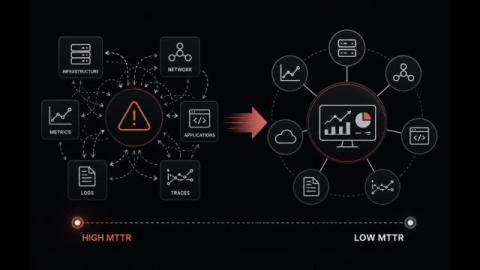
Why Siloed Monitoring Increases Your MTTR and How to Resolve It

Are you spending more time figuring out whose problem it is than actually fixing it? If that feels familiar, you are not alone. Many IT teams start their day with multiple dashboards and tools, yet still struggle to understand what is wrong when something breaks. Everything may look fine in one view, and fine in another, but the customer impact tells a different story. Incidents end up taking longer to resolve than they should. This is not about effort or capability.

Disaster Recovery Testing: A Practical Step-by-Step Guide for 2026 | Harness Blog

Effective disaster recovery testing follows a clear three-phase lifecycle: plan, execute, and review. Most DR programs fail not because of missing tools, but because of untested runbooks and unclear ownership. Platforms like Harness Resilience Testing bring chaos, load, and DR testing into one pipeline so teams can catch risks before they become incidents. Most organizations don't fail at disaster recovery because they lack technology.