Operations | Monitoring | ITSM | DevOps | Cloud

Autonomously monitor for impactful degradations with Bits Detection

Monitoring is built around the system a team understands at a point in time. Engineers add endpoints, move dependencies, and change user flows every day. Over time, that creates coverage drift as monitors keep reflecting the system as it used to behave, while changing paths introduce failure modes that teams didn’t yet know to watch for. Bits Detection automatically creates, tunes, and maintains monitors for your services.

Get reliable answers to business questions with Bits Data Analysis

Teams are wiring AI coding agents straight to their warehouse over MCP and asking things like “What was our revenue by channel in Q2?” The agent finds a revenue table, runs a query, and returns a number in seconds, with no waiting on the data team. While the answer initially looks right, the problem is that the number is often wrong.

A Practical Guide to Deploying LMM-Powered Apps with CLIP and pgvector

In this article we’ll show how we built an image search demo in Aiven Apps. The demo uses the CLIP Large Multimodal Model (LMM) to turn a user’s text prompts into a vector that can be compared with the precomputed vectors for a corpus of images, allowing the user to find images based on their text. While in this example the LMM input (the text prompt) is coming from the user, the principle is the same as for an internally generated query.

Index your Valkey Cache and Start Searching

Aiven for Valkey includes the Valkey Search module setup and ready to go. Here's what that looks like in practice: a small online shop adding real search on top of the cache it's already running. Needle & Yarn sells the yarn you crochet with (skeins) and the design patterns you crochet from. Like a lot of e-commerce backends, it already runs Valkey as a product cache, with each product stored as a Hash for hot-path performance.

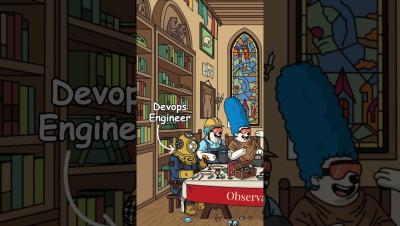
If You Are Building a Startup from a Vibe-Coded App, Don't Skip This #devops #programming #ai

Everyone is vibe coding products right now. But most applications are missing one crucial thing: Observability. In this video, I talk about: You can literally start this weekend: If you are turning your vibe-coded app into a real startup, observability should not be an afterthought.

Enforce Artifact Governance with OPA Policy-as-Code | Harness Artifact Registry

Artifact governance should not depend on manual checks. But for many teams, container images, software packages, and open-source dependencies are imported into registries from multiple internal and external sources. Without automated guardrails, vulnerable images, untrusted packages, end-of-life dependencies, or non-compliant artifacts can reach developers and delivery pipelines.

AI Cost Savings Unlocking Hidden Engineering Value

Bain says AI cost savings aren't arriving. But the value isn't missing, it's invisible. Most engineering teams can see token spend. They can see AI usage. What they can't see is whether any of it shipped, and whether it moved the needle on delivery. That's the measurement gap. And until it closes, AI ROI will keep looking worse than it should.

What is DNS TTL and How to Choose the Right Value

DNS TTL is one of those settings nobody thinks about until it bites them. Then they think about it a lot. This guide explains what DNS TTL is, how it works in plain language, and how to pick the right value for your records. By the end you will know what to set, when to change it, and why it matters when you migrate to a new server.

The AI Bottleneck: Why Your Modern Models Are Choking on Legacy and Streaming Data Architecture

Enterprise AI struggles not from inadequate models, but from fragmented data architecture. Critical business data remains trapped in legacy systems or lost in streaming complexity. Success requires bridging the gap between modern intelligence layers and underlying systems of record.