Operations | Monitoring | ITSM | DevOps | Cloud

Best Error Monitoring for Rails in 2026

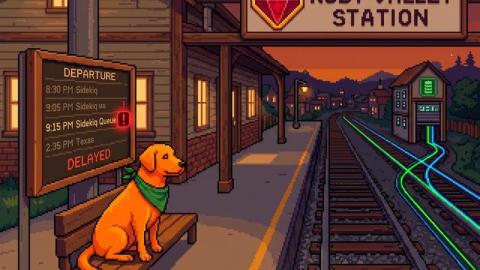
You deploy on Friday. Sidekiq starts failing on a job that worked fine in staging. Your error tool shows you a NoMethodError on line 47. But it doesn’t tell you that the job only fails when processing records created after the migration you ran on Thursday. The stack trace is correct and completely useless at the same time. This is the core problem with general-purpose error monitoring on Rails apps. Rails teams deal with N+1 queries that cascade into timeout errors.


DNS Spy Now Has an MCP Server. Ask Your AI About Any Domain.

DNS monitoring should be simple. You want to know if something changed. You want to know if a record propagated. You want to know if a phishing site just went live with your brand name in the domain. But in practice it takes work. You log in to a dashboard. You click through menus. You run a check, copy the output, paste it somewhere else. You repeat that process every time someone on the team asks a question. AI assistants like Claude and ChatGPT could help.

Premium self-hosted runners are generally available

In December, we shared our plans to introduce pricing for self-hosted runners. You told us loud and clear that a free option matters. Today, as Premium Runners become generally available, we are happy to share that we will continue to have a free tier, which includes the use of up to 100 self-hosted runners as part of your plan. If your team needs more scale, dedicated support, or advanced management features, you can upgrade to Premium Runners when you’re ready.

How IT Teams Can Start Their AI Automation Journey | Agentic AI, ITSM & Zero Ticket IT

How should IT leaders approach automation and AI? Where should they start, and how can they drive measurable results without getting caught up in the hype? In this episode of Agents of IT, Fran Fernandez and Zach Austin sit down with Chris Ellis, Senior Technology Solutions Specialist at RICOne, to discuss practical IT automation strategies, agentic AI, service desk transformation, and the journey toward autonomous operations.

Improving Digital Employee Experience with Intelligent Automation | Reduce IT Tickets by 70%

Are your employees still waiting hours or days for IT issues to be resolved? Many organizations have invested heavily in ITSM platforms, self-service portals, and chatbots. Yet service desks continue to struggle with growing ticket volumes, rising costs, slow resolution times, and poor digital employee experiences. In this webinar, Resolve and Redington explore why traditional service management approaches often stop at ticket creation instead of ticket resolution, and how intelligent automation is helping enterprises move toward a Zero Ticket IT model.

Level up your Code on Arm and Ubuntu | Ubuntu Summit 26.04

What are the latest developments in Arm tooling on Ubuntu? In this talk, David explores Arm tooling to analyze and optimize workload performance, and how AI-assisted development using agentic AI and static analysis can accelerate porting and tuning applications for the Arm architecture. About David David Haikney is a Technical Product Director at Arm. He is responsible for Arm Performix, a free performance toolkit that helps developers understand and improve real-world performance on Arm architectures.

NVIDIA Earth-2: OSS and Science for AI Weather and Climate | Ubuntu Summit 26.04

Discover how NVIDIA Earth-2 brings open source software and open science to weather and climate forecasting. Niall Robinson (NVIDIA) introduces a new way of making production-ready weather AI fully accessible for organizations to run, fine-tune, and deploy on their own infrastructure: NVIDIA Earth-2.

AI ROI: How to measure and provide the return on AI investments in 2026

Every quarter, the same scene plays out in boardrooms across the Fortune 500. The CEO asks: “What is the return on everything the company is spending on AI?” The CTO talks about productivity gains and developer velocity. The CFO points at a cloud bill that doubled but cannot isolate which line items are AI. The board nods politely and tables the discussion until next quarter, when the same question will produce the same non-answer. (If this sounds familiar, you are not alone. Keep reading.)

CloudZero AI Hub: The nexus of autonomous AI cost control

CloudZero originated as a way to make sense of your cloud costs. Costs spread across bills with billions of line items belonging to resources that might or might not have been tagged (or taggable), spun up by engineers working across teams, on different microservices, features, and products, that served a wide range of customers. Kubernetes. Multi-cloud. Check, check, check.

Your AI App Is Lying to You - Here's How to Fix That #devops #observability #programming

You shipped your AI app. But do you have all the answers? Do you actually know which model ran, how many tokens it consumed, or why it stopped? This is what LLM observability gives you, and most AI engineers are skipping it entirely. I built an SOS detection app and used OpenTelemetry to get full visibility into every single call. Token usage, model version, finish reason, and cost per call all in one place, standardised across any provider. Check out the OpenTelemetry GenAI docs in the link below; there is a lot more you can track than you think.