

Operations | Monitoring | ITSM | DevOps | Cloud

How to generate real-world load tests using Grafana Cloud k6 and production telemetry

For many development teams, a load test starts with a set of assumptions. You pick 100 virtual users because it sounds reasonable. You ramp for 30 seconds because that's what the tutorial showed. You set a 500ms threshold because it feels like a good target. The test passes, you ship the release, and production falls over at 6 p.m. on a Tuesday because your synthetic load never resembled how real users interact with your application.
The Bug Hiding in Your Production Traffic

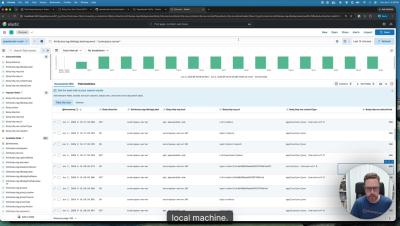
Your logs showed 500 errors. The traces showed the dependency graph. Neither showed the actual bug, a DEL control character getting appended to the query string. This is how I found it. In this video I walk through Speedscale BYOC (bring your own cloud): capture real production traffic, store it in your own Elasticsearch cluster inside your VPC, pull it down locally with a single script, and reproduce the exact bug using proxymock. The data never leaves your environment.

21 AI concepts every beginner should know before their first interview

If you’re prepping for your first AI or MLOps interview, the hardest part usually isn’t always the hands-on element. For me, it’s the vocabulary. Interviewers sometimes lob single-word concepts at you (“what’s quantization?”) and watch how far you can carry the thread. The questions sound clear-cut, but each one is really a doorway into a bigger topic, and the interviewer is judging how cleanly you walk through it.

Pager Replacement: Modern Alternatives to Physical Pagers

While physical pagers were once the undisputed gold standard for urgent communication, their technological limitations now create dangerous bottlenecks for modern healthcare and IT teams. Carrying multiple devices is not only inconvenient but increasingly inefficient, prompting a widespread shift away from legacy hardware. As of May 2026, the obsolescence of traditional pagers is undeniable.

Top IT Ticketing & SOAR Tools for Automated Workflows

For IT and SecOps teams, the challenge is not a lack of alerts. It is the sheer volume of noise coming from monitoring tools, security systems, and support channels. Trying to manage this volume manually is not just slow; it’s a recipe for mistakes, team burnout, and critical system failures.

Autonomous Error Remediation in Cursor with Lightrun MCP

Lightrun's Gidi Freud demonstrates how your AI coding agent can now investigate and fix production errors, autonomously. Watch how Cursor, guided by Lightrun's Error Remediation skill, picks up a Sentry error, instruments the live service with a runtime snapshot, captures real evidence, and opens a validated PR for approval.

Announcing HAProxy 3.4

HAProxy 3.4 is a milestone release that significantly advances HAProxy’s legendary flexibility, performance, security, reliability, and observability. Dynamic backend management simplifies integration with modern architectures, memory efficiency improves across a broader range of workloads, native cryptographic operations at the proxy layer open new possibilities for API security architectures, and OpenTelemetry support makes HAProxy a first-class participant in distributed tracing pipelines.

RISC-V profiles - why is RVA23 significant?

One of the important offerings of the RISC-V Instruction Set Architecture (ISA) is the ability to customize and extend the base instruction set. An initial reaction to hearing this is often to worry about software portability and compatibility, since if every RISC-V CPU offers a slightly different set of instructions, software won’t be portable.
