Operations | Monitoring | ITSM | DevOps | Cloud

The essential config settings you should use so you won't drop logs in Loki

In this post, we’re going to talk about tips for securing the reliability of Loki’s write path (where Loki ingests logs). More succinctly, how can Loki ensure we don’t lose logs? This is a common starting point for those who have tried out the single binary Loki deployment and decided to build a more production-ready deployment. Now, let’s look at the two tools Loki uses to prevent log loss.

Close the Loop with User Feedback

Everyone’s software crashes. As an engineer, you don’t feel your users’ frustration unless they reach out to customer support, write bad reviews, or tweet about it. This feedback is often lacking relevant information to resolve the issue. In some cases, you can re-engage with the customer, but that process is time-consuming and inefficient. Another option would be to examine the crash reports, but sometimes they don’t give sufficient insight to fix the problem.

Online CNCF event: Why you should use NATS for your next Cloud native application

When building Cloud applications, we often put significant effort into breaking down our monoliths into small code pieces. They are easier to maintain but hard to make them communicate together. This is where NATS comes in. NATS is a simple and highly performant messaging system for Cloud-native apps. In this talk, I will share my experience using NATS at Qovery, why you should or should not use it, and the difference between the well-known RabbitMQ and Kafka.

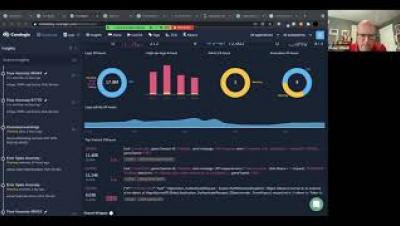
Three ways tight integration makes logging and monitoring easier

Driving productivity of software development and delivery teams is critical for any organization. The six years of research by DevOps Research and Assessment (DORA) showcases the role easy-to-use tooling plays in driving this productivity and in turn a better work/life balance for the team. The research finds that highest performing teams are 1.5x more likely to have tools they consider easy to use.

How to Monitor Servers for DISA STIG Policy Compliance

Learn how to automate compliance policy monitoring for device, server, and application configurations against a benchmark with SolarWinds Server Configuration Monitor. Each rule reads a configuration from a file, device, command, registry setting, etc.; pulls the needed information; evaluates it against the benchmark; and returns pass, fail, or unknown.

JFrog Pipelines for Shippable Customers

JFrog’s acquisition of Shippable completed the JFrog Platform by providing a CI/CD orchestration layer in the form of JFrog Pipelines. During the last two years following the acquisition, we continued to provide access to the Shippable service to avoid any operational disruption for our customers. JFrog Pipelines has matured to a point at which we can now recommend it as a destination for Shippable customers. Consolidating our efforts to a single product gives us the focus we need to bring you more innovation faster.