Operations | Monitoring | ITSM | DevOps | Cloud

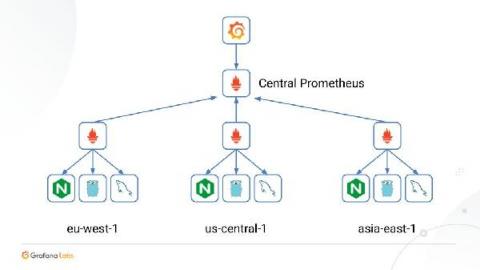
The new Grafana Cloud: the only composable observability stack for metrics, logs, and traces, now with free and paid plans to suit every use case

Oftentimes users of open source are told to go download it and figure it out… or pay for a managed solution in the cloud. So the typical choice is free and do-it-yourself or expensive and easy. With our new changes to Grafana Cloud, we are making it both free and easy to have a real, composable observability solution.

2020 in Review: LogicMonitor Product Advancements

2020 is finally over and all of us are hopeful of a return to a sense of normalcy in 2021. At LogicMonitor, we came back re-energized from a healthy year-end break and are putting the finishing touches on our product roadmap for this year. This is a great opportunity to look back on what we accomplished in 2020 despite all of the challenges we faced.

How to build the ideal dev team dashboard

So you’ve now finally finished putting all the pieces together – transitioned to Azure, deployed resources, deployed applications, got familiar with Azure Monitor and set up all the monitoring. You’re now collecting all the monitoring, application performance and security data for your Azure resources in Log Analytics workspaces, ready for analysis. (Head over to our Azure Monitor Learning Path if you're still figuring out how to do all that.) But is only the collection enough?

Runtime Threat Detection on AWS

Tune into our #LinkedInLive event on Jan 12 at 10 am PST and Join Sysdig and AWS experts to learn how to detect and respond to threats to your production applications running on services like AWS Fargate and Amazon EKS. With the rise of microservices and DevOps practices, new security threats put your infrastructure and applications at risk. Hear how to leverage signals from AWS CloudTrail and open source Falco to spot unexpected behavior, block threats, and validate compliance across your AWS environment.

Getting up and running with Calico on your Rancher Kubernetes Cluster

Rancher is a great way to deploy and manage Kubernetes clusters across a broad range of environments, abstracting away many of the differences between the environments, and using Canal for run-anywhere networking. But what if you want to up your networking game to squeeze the most out of your clusters? In this training session you’ll learn about the various networking options available to you in Rancher, and considerations to take into account in order to select the best option for your environment.

Sentry Receives SOC 2 Type 2 Certification

No matter your business, keeping customer data secure is critical toward keeping your customer’s trust. With the rise in data breaches (and subsequent security certifications), we don’t have to tell you why you should scrutinize every cloud service that you consider — including us. To that end, we believe in being explicit with our compliance. And that includes how we pursue independent certifications like ISO, HIPAA, and now, SOC 2 Type II.

Save Time and Money by Automatically Deleting Unused Azure Load Balancers

Using the cloud reduces on-premises infrastructure costs and related maintenance. Instead of deploying more servers, storage, and networking components to your own datacenter, you are now deploying these as cloud resources. Using the cloud is supposed to reduce infrastructure and maintenance costs. However, deploying cloud resources also risks over-commissioning, under-usage, and keeping resources running that are not always needed or, even worse, no longer in use.

Handling failures when deploying to multiple databases with SQL Change Automation

How do you handle deployment failures with a single-tenant database architecture? We’ve had a question come up from a couple of customers regarding an interesting use case with Redgate’s SQL Change Automation. In this scenario, customers say: A natural question that arises is what to do when a deployment fails against a single database. For example: One approach that seems simplest to folks is wrapping the entire multi-database deployment into a single transaction.