Kubeflow is the open-source machine learning toolkit on top of Kubernetes. Kubeflow translates steps in your data science workflow into Kubernetes jobs, providing the cloud-native interface for your ML libraries, frameworks, pipelines and notebooks. Read more about Kubeflow
Industry 4.0 is taking every industry by storm with unprecedented advancement with innovative technology solutions. Its key technologies such as automation, AI, ML, Data Analytics and IoT enables industries to drive business operations with automated data-driven intelligence. Integrating the physical and digital systems, the manufacturing industry is increasingly adopting intelligent manufacturing in this Industry 4.0 era.
Picture this: It’s a normal day of working from home as usual since the COVID-19 outbreak. After that satisfying cup of coffee, you log in. But something is wrong. No matter how many times you click, your files don’t open. Your screen is frozen and refuses to budge. And then, you see one of the worst nightmares any IT admin can imagine: “Oops, your files have been encrypted. But don’t worry, we haven’t deleted them yet.
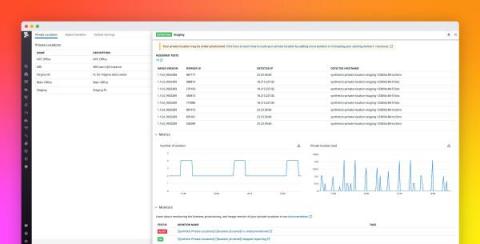
As part of your monitoring and testing strategy, you may run tests on different types of applications that are not publicly available—from local versions of production-level websites to internal applications that directly support your employees. Testing each one requires leveraging tools that allow you to verify functionality across a wide range of devices, browsers, and workflows while maintaining a secure environment.
Datadog CI Visibility, now available in beta, provides critical visibility into your organization’s CI/CD workflows. CI Visibility complements Datadog’s turn-key CI provider integrations and the integration of synthetic tests in CI pipelines to give you deep insight into key pipeline metrics and help you identify issues with your builds and testing.
A VPN, allows remote employees to create a secure traffic connection to the corporate network. These connections essentially tunnel from a computer or mobile device through a VPN server, often through the public Internet. VPN technology has been around since the mid-1990s, but its usage is now going mainstream due to Covid. As Covid accelerates, it means new monitoring challenges for IT amid a high VPN adoption.
Break Things on Purpose is a podcast for all-things Chaos Engineering. In this episode of the Break Things on Purpose podcast, we speak with Paul Marsicovetere, Senior Cloud Infrastructure Engineer at Formidable.
Having a Status Page is like having a dog. A dog alerts you to an incident; sudden noise, approaching neighbor, squirrel… A dog sounds the alarm on an intruder. A dog even alerts you to maintenance by barking at every handyman, garbage truck, and gardener within sight. As a dog fetches the same stick over and over, so does a status page fetch the attention of your users – especially during a live incident – with each browser refresh they wait for the status to change.
Traditionally an APM tool, Scout has expanded its service offerings to now include error monitoring of Python web applications for more cohesive and actionable observability insights within a single platform. This new feature supports an overall better user experience by eliminating the need for multiple web-application monitoring services; Scout APM with Scout Error Monitoring offers performance and error insight and alerting within a single, integrated dashboard.