Operations | Monitoring | ITSM | DevOps | Cloud

The Place Where Modern Operations & Technology Come Together

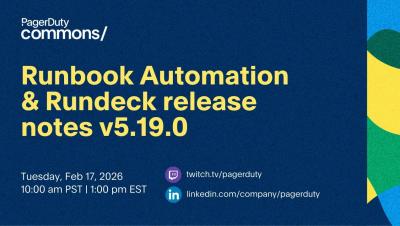
Runbook Automation Release Notes v5.19.0
Join us for the latest features in Runbook Automation and Rundeck!
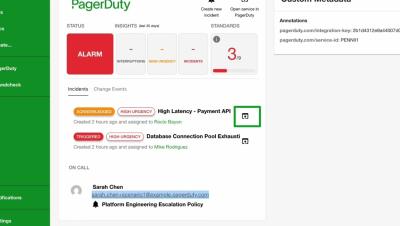
PagerDuty x Backstage Plugin Demo: Eliminate Context Switching for On-Call Engineers
Join Rocío, Product Manager of the Forward Deploying Engineering team at PagerDuty, as she demonstrates how the PagerDuty Backstage plugin transforms incident response by bringing critical operational data directly into your developer portal.
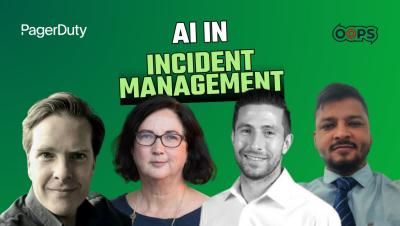
PagerDuty + OOPS Meetup: AI in Incident Management
AI is transforming industries at pace, and Incident Response is no exception - raising important questions about how humans and automation should work together when systems are failing and pressure is highest. Panelists:Andrew White (Technology Director, checkout.com) James Pickles (Senior Solutions Consultant, PagerDuty)Sarah Wells (Independent Consultant, former Technology Director at FT) Suraj Singh Dadwal (Team Lead, Incident & Problem Management, IG)

PagerDuty + Guide Integration: Never Schedule an Interview Over an Incident Again
For engineering organizations running on PagerDuty, on-call schedules are sacred. When P0 incidents happen, you need your best engineers focused and ready, not getting scheduled to conduct an interview they’ll have to decline. For years, recruiting teams have been playing a manual game of Tetris, cross-referencing on-call rotations against interviewer availability every single time they book a technical screen or panel.
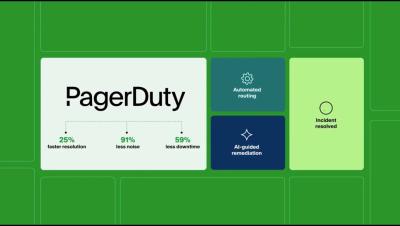
When Minutes Matter, Records Aren't Enough
When critical systems go down, your business needs action, not another ticket. PagerDuty's Operations Cloud doesn't just track incidents; it resolves them. With AI-powered automation, intelligent routing, and real-time response, we turn alerts into outcomes while your competitors are still filling out forms. Deploy in days, not months. No complex implementation. No bloated services. Just faster resolution and lower total cost of ownership.
PagerDuty Appoints Chris Ferro as Chief Legal Officer
PagerDuty, Inc. announces that Chris Ferro has joined the company as Chief Legal Officer. Ferro will oversee all legal functions at PagerDuty, including corporate, compliance, employment and product matters, with a focus on advancing business objectives while mitigating legal and regulatory risk.
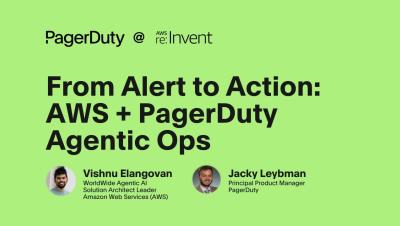
AWS re:Invent 2025 - From Alert to Action: AWS + PagerDuty Agentic Ops
Hear how AWS and PagerDuty are transforming incident management with agentic & generative AI. Learn how agents within AWS Quick Suite and PagerDuty work together to detect, diagnose, and resolve incidents with less toil and swivel chair. This session explores how AI collaboration is reshaping resilience across cloud environments.

AWS re:Invent 2025 - Top 10 new features in PagerDuty
There's so much new stuff! Senior Developer Advocate, Mandi Walls, walks through 10 new features we think you'll love.
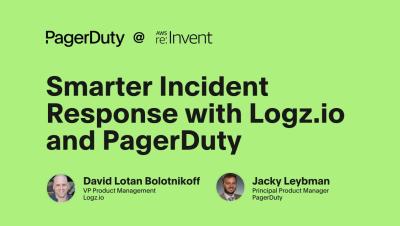
AWS re:Invent 2025 - Smarter Incident Response with Logz.io and PagerDuty
In this session, Jacky Leybman from PagerDuty and David Lotan Bolotnikoff from Logz.io showcase how PagerDuty and Logz.io combine generative AI with rich historical context to automate root cause analysis and accelerate incident response. By correlating real-time telemetry with prior incidents and runbooks, teams reduce manual toil and MTTR while maintaining human-in-the-loop oversight and transparent reasoning.