Operations | Monitoring | ITSM | DevOps | Cloud

Using Cortex AI Assistant to Clean Flags

Every team ships feature flags. Nobody owns the cleanup. The result is predictable: ownership gaps, environmental drift, complex targeting nobody remembers writing. In this Feature Friday, Cortex VP of Product Kara Gillis walks through how she triaged nearly 100 of our own LaunchDarkly flags using the Cortex AI Assistant in Slack. The Assistant queried our internal Feature Flag Scorecard and returned.

Cultivating Local Brand Loyalty Through Data-Driven Digital Marketing Strategies

The digital marketing landscape has undergone a massive transformation in recent years. While global reach was once the ultimate prize for growing brands, the pendulum has swung firmly back towards local community connection. Post-pandemic shifts in consumer psychology have dictated a new era of commerce. Consumers are no longer just looking for the biggest, most expansive provider on the internet. They want to find businesses that understand their specific everyday needs, operate in their immediate physical vicinity, and share their regional cultural values.

Real-Time Analytics Is Quietly Reshaping Network Operations and Service Assurance for Modern CSPs

For years, telecom operators treated analytics as a reporting layer. Data went into dashboards, engineers reviewed incidents after the fact, and performance reports helped leadership understand what had already gone wrong. That model is starting to break. Modern telecom infrastructure changes too quickly for delayed analysis to be useful. A latency spike inside a cloud-native core can ripple across services in seconds. A software bug in one region can affect thousands of enterprise users before a traditional monitoring workflow even flags the issue.
Sponsored Post

How to Reduce MTTR When Third-Party Services Go Down

Most MTTR guides assume the problem is in your infra. For modern apps, it's often not - it's Stripe, AWS, Auth0, or another vendor. Vendor status pages lie by omission. The lag between impact and acknowledgment can stretch to an hour or more. You need two runbooks, proactive vendor monitoring, and graceful degradation baked in before the 3 AM page hits. This post shows you exactly how.

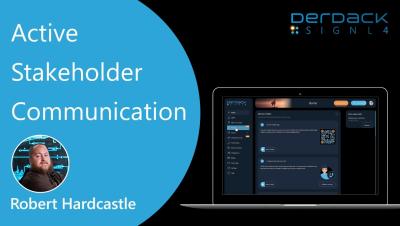
When an incident hits, who stays in the loop?

Your IT team gets alerted - but stakeholders? They’re left checking status pages or chasing updates. There’s a better way. With SIGNL4 Active Stakeholder Communication, everyone stays informed automatically — without adding extra work for your team. Send real-time updates instantly via push notifications Create stakeholder groups for different scenarios Track exactly who was notified — and when.

ActiveMQ Monitoring & Alerting Setup: The Complete 2026 Guide

Most ActiveMQ outages are not sudden failures. They are visible in the metrics for minutes, sometimes hours, before they become incidents. A memory usage graph climbing past 60%. A queue depth that isn't draining. An enqueue time that doubled after a deployment. A consumer count that dropped from 3 to 1 at 2 AM.

Observability and Security for the AI Era

Datadog has always been driven by a broader vision of helping teams understand and operate complex systems. In this session, you’ll hear from Michael Whetten, Product SVP, and Abrar Hussain, Senior Director, Product Management, as they share the latest updates across the Datadog product suite and discuss how that vision continues to shape the platform’s evolution and support the next generation of AI-driven applications.