Operations | Monitoring | ITSM | DevOps | Cloud

Getting Started with Longhorn Distributed Block Storage and Cloud-Native Distributed SQL

Longhorn is cloud-native distributed block storage for Kubernetes that is easy to deploy and upgrade, 100 percent open source and persistent. Longhorn’s built-in incremental snapshot and backup features keep volume data safe, while its intuitive UI makes scheduling backups of persistent volumes easy to manage. Using Longhorn, you get maximum granularity and control, and can easily create a disaster recovery volume in another Kubernetes cluster and fail over to it in the event of an emergency.


Introducing our free Secure Remote Access Toolkit for IT teams

The global corporate landscape is on the brink of a complete premises lockdown in light of the COVID-19 crisis. Service disruption is inevitable, and enterprises’ business continuity plans are being put to the test. Despite this challenge, it’s heartening to see companies across nations take quick steps to ensure the health and safety of their employees during these trying times.

Building Request Metrics

We’ve been working on something big. We’re building Request Metrics, a new service for web performance monitoring. TrackJS is a fantastic tool to understand web page errors, but what if your pages aren’t broken, just slow? What if the checkout page takes 10 seconds to load? What if that user API is slowing down from your recent database change? What pages have the worst user experience? Request Metrics will tell you that.

Prometheus vs. InfluxDB: A Monitoring Comparison

Monitoring has been around since the dawn of computing. Recently, however, there’s been a revolution in this field. Cloud native monitoring has introduced new challenges to an old task, rendering former solutions unsuitable for the job. When working with cloud native solutions such as Kubernetes, resources are volatile. Services come and go by design, and that’s fine—as long as the whole system operates in a regular way.

Easily Build Jenkins Pipelines - Tutorial

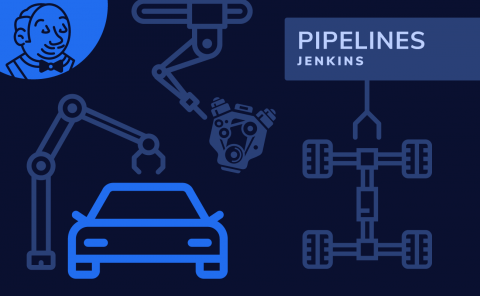
Are you building and deploying software manually and would like to change that? Are you interested in learning about building a Jenkins pipeline and better understand CI/CD and DevOps at the same time? In this first post, we will go over the fundamentals of how to design pipelines and how to implement them in Jenkins. Automation is the key to eliminating manual tasks and to reducing the number of errors while building, testing and deploying software.

Parsing Multiline Logs - The Complete Guide

In the context of logging, multiline logs happen when a single log is written as multiple lines in the log file. When logs are sent to 3rd party log monitoring platforms like Coralogix using standard shipping methods (e.g. Fluentd, Filebeat), which read log files line-by-line, every new line creates a new log entry, making these logs unreadable for the user.