In the past, applications would be deployed by installation on a host, using the operating system package manager. This was a heavy solution with tremendous reliance on the operating system package manager and increased complexity with libraries, configuration, executables and so on all interconnected. Then came containers. Containers are small and fast, and are isolated from each other and from the host.
This recipe is similar to the previous rsyslog + Redis + Logstash one, except that we’ll use Kafka as a central buffer and connecting point instead of Redis. You’ll have more of the same advantages.
Starting from Elasticsearch 5.0, you’re able to define pipelines within it that process your data, in the same way you’d normally do it with something like Logstash. We decided to take it for a spin and see how this new functionality (called Ingest) compares with Logstash filters in both performance and functionality. Is it worth sending data directly to Elasticsearch or should we keep Logstash?
Reserved instances are one of those things that, when you first hear about them, you say, “Wow! I could save a lot of money!” And then you start to try and figure out how many you need? What sizes? Which operating systems? In which regions? Should they be convertible? Should I choose a 1-year or 3-year term? All up-front, partial up-front, or no up-front? How much compute am I actually going to need over that term?
IT Ops and DevOps teams in every organization are capable of focusing on revenue-generating initiatives and projects. Unfortunately they’re held back by constant fire-fighting…which means they are reduced to supporting just the current state and existing/legacy applications and services.
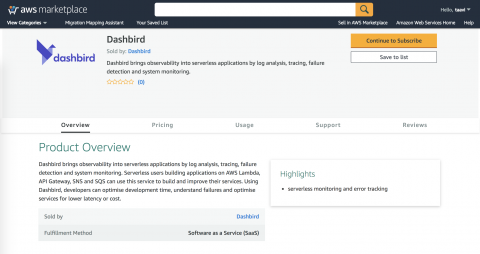
Dashbird is now available at AWS Marketplace. This means that now users can subscribe directly through AWS Marketplace and manage the subscription through AWS. You can see the listing and subscribe here.