An update on how xMatters service reliability platform is improving animal rescue response times through WIRES in Australia. We are extremely grateful for xMatters support and are excited to share this update with the xMatters community. We have made so much progress with our wildlife rescue response systems since the devastating bushfires of 2019 and 2020, despite the continuing challenges of COVID-19.
I worked at Google for six years. Internally, you have no choice — you must use Kubernetes if you are deploying microservices and containers (it’s actually not called Kubernetes inside of Google, it’s called Borg). But what was once solely an internal project at Google has since been open-sourced, and has become one of the most talked-about technologies in software development and operations.
Have you heard the news? The latest Gartner Magic Quadrant for Unified Endpoint Management Tools (UEM) is out, and here at Ivanti we’re thrilled to be recognized in the Visionary quadrant for completeness of vision and ability to execute. We’re especially proud to be positioned as a Visionary as we feel this reflects the forward momentum we bring to the market.
Creating a new Host within the Icinga 2 configuration files is fairly easy. Basically you only have add an object of the type “Host” to a config file and reload Icinga 2. Doing the same with Icinga Director is even easier, you don’t even have to bother with terminal editors and configuration files. However, what sounds so easy for an experienced user may not be so obvious for beginners.
We are excited to announce support for Google Compute Engine (GCE) N2 general purpose virtual machine (VM) types, and additional hardware configuration options powered by N2 custom machine types. N2 VMs leverage Intel 2nd Generation Xeon Scalable processors and provide a balance of compute, memory, and storage. N2 machine types also offer more than a 20% improvement in price-performance over the first-generation N1 machines.
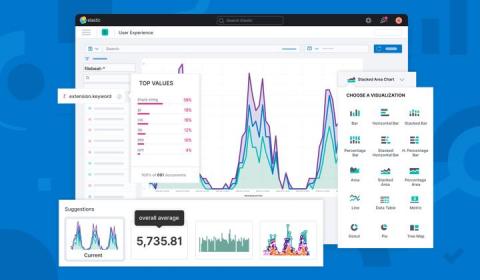
Kibana creates easy ways to do powerful things with all of your data — to ask and answer questions and follow the flow of analysis. Many times the answer to your question requires calculations based on queried data. Formulas allow you to author your own metrics by combining multiple aggregated fields using math operations. In addition, moving through and replaying your data in time and space are powerful ways to gain historical context and understand additional insight about the present.