Operations | Monitoring | ITSM | DevOps | Cloud

The latest News and Information on APIs, Mobile, AI, Machine Learning, IoT, Open Source and more!

Peer Review: CircleCI's CFO & CMO on What Comes After AI Code Generation

Last year was the year of AI code generation. This year is everything that comes after: validation, quality, and making sure what gets built actually ships. Nobody's better positioned to talk about that than CircleCI, and in this episode of Peer Review, CFO Blake Buisson and CMO Chitra Balasubramanian dig into what that moment means for the company and the people building it.
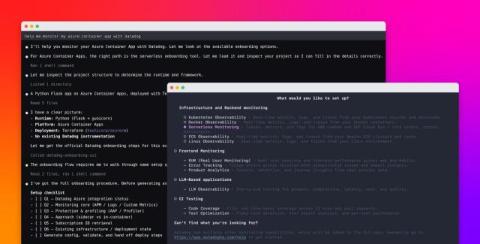
Instrument serverless apps with agentic onboarding

Serverless platforms like AWS Lambda, Google Cloud Run, and Azure Container Apps let teams run applications without managing infrastructure. However, getting full visibility into those workloads has traditionally required a lot of manual setup. A single team may deploy serverless applications across multiple clouds by using tools such as Terraform, AWS SAM, AWS CDK, and the Serverless Framework. Each of these platforms, runtimes, and deployment tools requires its own instrumentation steps.

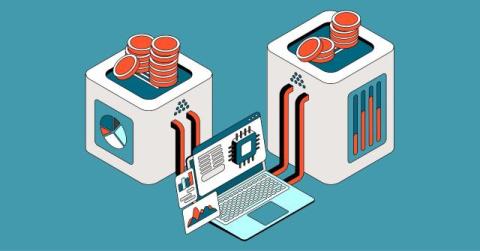
AI agent cost: what agents really cost to run

AI agent cost in 2026 is mostly a consumption bill, not a subscription. Running an agent costs anywhere from fractions of a cent for a simple routed task to $5 or more for a complex multi-step job, because one request can trigger 3 to 10 model calls behind the scenes. Average production deployments land between $3,200 and $13,000 per month in operational spend. Here is where that money actually goes.

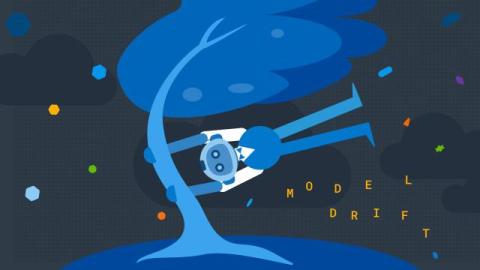
AI Model Drift: How to Keep Models Reliable

AI model drift is when an AI system's performance and accuracy degrades over time because the data, user behavior, or business environment has changed since the model was trained or evaluated. Even if latency, uptime, and infrastructure metrics remain healthy, model quality can quietly decline, leading to less accurate predictions, inconsistent responses, and reduced user trust.

AI can't correlate what was never standardized

Steve Flanders (Senior Director of Engineering, Splunk) makes the case that AI can't save an observability stack that never agreed on a standard. Mix formats across metrics and logs, and AI stops correlating and starts guessing, which means you either make the wrong call or miss the answer you actually needed. OpenTelemetry is one fix, but Prometheus and Fluentd work too. The standard matters more than which one you pick.

SaaS Tools: An Essential Guide for Navigating Insurance Compliance for Franchise Businesses

For franchise businesses, managing insurance compliance can be a complex and time-consuming task. The intricacies of ensuring every franchisee adheres to corporate policies, while also meeting local regulatory requirements, can overwhelm even the most organized teams. Moreover, the need to regularly update and verify insurance certificates adds another layer of complexity. This article will delve into the key challenges faced by franchise businesses in maintaining insurance compliance and explore how SaaS tools specifically designed for this purpose can streamline these processes.

RCM Solutions for Healthcare Providers Seeking Better Financial Visibility

Making good decisions about staffing, expansion, or even day-to-day operations gets a lot harder when nobody can say with confidence how revenue is actually performing. A lot of healthcare providers run into exactly this problem - not because the money isn't coming in, but because nobody has a clear enough view of the process to explain where it's slowing down or why. That's the gap dedicated RCM solutions for healthcare providers are built to close, turning scattered billing data into something leadership can actually use to make informed calls instead of educated guesses about where the money actually goes.

Best AI Image Generators (2026)

If you still think that creating high-quality images must take a lot of time and resources, think again, because in 2026, that is no longer the case. Now, AI image generators can instantly help you turn simple ideas into impressive visuals in just a few seconds. It doesn't matter if you want to create content for social media, design more complex marketing materials, or just bring your most random ideas to life; there's probably an AI image generator that can help you achieve exactly what you need.

From Incident Data to Operational Knowledge: A Safer Role for Generative AI in IT Ops

IT operations teams produce an enormous amount of information. Alerts, logs, incident messages, deployment records, support tickets, runbooks and post-incident reviews all contain operational knowledge. The problem is that much of this knowledge remains fragmented and difficult to reuse. Generative artificial intelligence can help organise and transform this information, but its safest role is not unrestricted control over production infrastructure. Its strongest initial use cases involve reading, summarising, classifying and drafting information for an engineer to review.