Operations | Monitoring | ITSM | DevOps | Cloud

The latest News and Information on APIs, Mobile, AI, Machine Learning, IoT, Open Source and more!

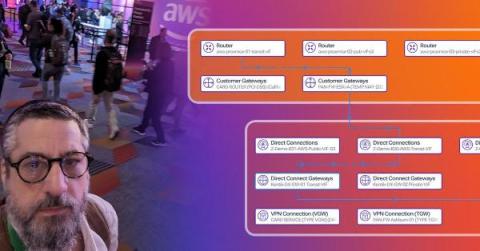
How Grafana powers the dynamic visualizations of IoT data for AWS IoT TwinMaker

At re:Invent this year, AWS announced its new digital twin service, AWS IoT TwinMaker (in preview), which allows users to create digital twins of real-world systems like buildings, factories, industrial equipment, and production lines. Using a digital twin to monitor and improve operations for a physical system requires ingesting data from IoT sensors, process instruments, cameras, and enterprise systems, and curating and associating data from these disparate sources.

Diagnostic Artificial Intelligence Models Can Be Tricked By Cyberattacks

Researchers discovered that diagnostic artificial intelligence models used to detect cancer were fooled by cyberattacks that falsify medical images. Diagnostic artificial intelligence (AI) models hold promise in clinical research, but a new study conducted by University of Pittsburgh researchers and published in Nature Communications found that cyberattacks using falsified medical images could fool AI models.

MQTT Topic and Payload Parsing with Telegraf

Buckle up, this one isn’t short…but I’m hoping it will be thoroughly informative! This post is about Telegraf as a consumer of MQTT messages in the context of writing them to InfluxDB. If you are interested in and unfamiliar with Telegraf, you can view docs here. Unsure if Telegraf aligns with your needs? I make a case for it in the Optimizing Writes section of this blog post. It may also help to have an understanding of Line Protocol, InfluxDB’s default accepted format.

AI and machine learning in compliance technology

It’s true that AI and machine learning have already provided us with some opportunities to transform entrenched methods of recording and monitoring communications in regulated industries. However, to date, most companies’ injection of AI has been limited and solutions have been piecemeal. But that’s all about to change as the rapid expansion in the applications of AI in compliance is just around the corner.

Graph Observability: Honeycomb and Apollo GraphQL With OpenTelemetry

With David Pickavance, Senior Sales Engineer at Apollo GraphQL Learn how to use Honeycomb, Apollo Studio, and Open Telemetry to optimize GraphQL performance for a federated graph. See how to debug a federated GraphQL query across subgraphs and down to the database layer using Honeycomb.

AI Search: The secret to better customer self-service

Hari Vats, senior knowledge manager of global technical support at ServiceNow, co-authored this blog. Who wouldn’t want a faster, more relevant search on their knowledge base? Improving search results is tricky. Organizations can spend a lot of time and money making small improvements to very complex, dynamic environments of information. When ServiceNow acquired an AI search technology company in 2020, we were thrilled to see an immediate return.

Yes, Open Source Is Sustainable

Two months ago, we announced our annual investment in open source maintainers, mostly folks whose work we depend on to deliver Sentry to you, plus a few research and hobby projects that our employees put on our radar. Two days ago, six of these maintainers joined us for a one-hour panel called “The Future of Open Source: Is It Sustainable?” I co-hosted with Jessica Lord, Product Manager of GitHub Sponsors.

The EPC-U3233 by Advantech gets Ubuntu certified to accelerate AIoT Applications

Canonical and Advantech have collaborated to help enterprises accelerate Edge AIoT Applications with Ubuntu 20.04 LTS certified on the EPC-U3233, powered by an 8th Gen Intel® Core™ i series processor. This compact fanless embedded PC facilitates data-intensive computing in IoT edge applications.

Log4j gets added to the code "wall of shame."

It seems that every few weeks, we are alerted to a new significant security issue within one of the plethoras of code elements that are widely used. The same pundits discuss the same range of concerns with open-sourced code each time. The list of “usual suspects” is long, and I know I could add at least 20 additional “reasons” to this list without thinking about it too hard. I’m not sure that open-sourced code is riskier than proprietary developed code. There I said it.