Mailchimp
Not subscribed to OpsMatters Newsletter


Web servers are among the most important components in modern IT infrastructures. They host the websites, web services, and web applications that we use on a daily basis. Social networking, media streaming, software as a service (SaaS), and other activities wouldn’t be possible without the use of web servers. And with the advent of cloud computing and the movement of more services online, web servers and their monitoring are only becoming more important.
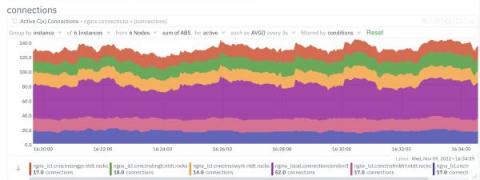
The Apache HTTP Server (Apache HTTPd) is one of the most popular open source web servers available. HTTPd was also the first project developed by the Apache Software foundation which now supports hundreds of well known projects including Kafka, Cassandra and Hadoop. Netdata has a public demo space where you can explore different monitoring use-cases. Check out the Apache demo room to explore and interact with the charts and metrics described here.
Throughout KubeCon + CloudNativeCon NA 2022, our team was able to speak to over 100 people from the cloud-native community to learn more about their thoughts and experience of the event. This blog will explore what the community thought was the hot topic of discussion at KubeCon + CNC NA 2022, which includes topics such as security, cost, and developer experience. Check out the full video below.
Last week we launched a number of features across the PagerDuty Operations Cloud portfolio to help teams minimize downtime and protect customer experience. One of the areas where PagerDuty continues to invest is collaboration and communication during incident response to ensure that all impacted stakeholders across the business are updated in real-time.
Engineering teams use a lot of single-domain monitoring tools. In fact, the average team manages and maintains 16 monitoring tools — and up to 40 — according to Moogsoft’s State of Availability Report. While IT leaders select and implement these tools to save teams time, our research finds they do quite the opposite. Engineers spend far and away more time on monitoring than they do on any other task — innovative, value-creating tasks included.
Did you know? Baby goats stand and take their first steps within minutes of being born. There is no stopping the goats! Likewise, there’s no stopping the goats at Cribl from innovating! Our product herd is growing rapidly, and it’s time for us to share the latest and greatest about our head of the product herd – Cribl Stream. (If you haven’t figured it out yet, We love goats here at Cribl. We even have a goat mascot; meet Ian)
If you have an Amazon Prime membership, you probably got it because of fast and free shipping. And then you discovered your membership also lets you watch tv, movies, and even live sports through Prime Video. When Amazon acquired Whole Foods, your membership included grocery delivery in under 2 hours! The more I explore my Prime membership, the more I find new and exciting access to services I don’t have to sign up for.
Cribl, a leader in open observability, today released Cribl Search, the first federated query engine focused on observability and security data. Search flips the observability market on its head, dispatching queries to where the data is already at rest. Cribl Search was engineered to let you search data-in-place, whether the data remains at the edge, in the stream, in the observability lake, at the endpoint, or even in existing search tools.
Cribl CEO Clint Sharp first announced Cribl Edge in March of 2022. Our SVP of Marketing, Abby Strong, complemented the announcement with a well-rounded blog post discussing why Cribl Edge is the first fully manageable and auto-configurable agent designed to collect telemetry data at scale. Even Aerosmith gave the product a shoutout! Well, not really, but wouldn’t it be fun if it was true? 🙂 We’re thrilled to be back with exciting news about the latest release of Cribl Edge (4.0).