Mailchimp
Not subscribed to OpsMatters Newsletter


Any MSP owner or IT director knows the pain of losing valuable institutional knowledge. While often overlooked, strong IT documentation can be the difference between hours, potentially days, of downtime and a smooth operation. To avoid these costly missteps, IT pros are increasingly turning to IT documentation software to help document, standardize, and use contextual information about their IT environments.
Today, NinjaOne, a unified IT operations platform for MSPs and IT departments, has introduced new image backup capabilities to Ninja Data Protection, the company’s natively developed backup and disaster recovery solution. Additionally, the company is now offering Ninja Protect, a new bundled security product with BitDefender to improve users cybersecurity standards and resist ransomware.
Javascript execution analysis on dev environments is easy—just use Google Developer or some other free tools. However, getting the same level of analysis while your application is being used by a real user is much harder. You can’t possibly ask the end-user to help you troubleshoot. Even if you did, the user probably wouldn’t know what to do and they definitely wouldn’t be impressed by your organization.
In this episode of the Stream Life Podcast, Nick Heudecker and Ed Bailey look at SaaS security platforms and managed security providers and how they’ve grown over time. They look at the benefits the model brings to organizations, how it is growing across the world, the challenges it can also bring, and the questions you should be asking your vendors.
eG Innovations is an end-to-end performance monitoring solution provider with a dedicated MSP solution and an MSP partner program to allow MSPs to use our functionality to provide value-added premium services. For example, MSPs use our eG Enterprise solution to provide managed first line helpdesk support or to provide dashboards and portals to enable individual clients to monitor their IT infrastructures and applications.
Across the globe, in-person technology events are beginning to emerge from their pandemic hibernation. For developers and DevOps teams, no event has been more anticipated than AWS re:Invent, which is back in Las Vegas, November 29th — December 3rd to help bring us all back together and slowly let us find our new normal. While handshakes may be replaced by elbow bumps or other newfound greeting rituals, we are excited to be back and see all of you in real life.
One of the most common questions we get at Honeycomb is “What insights can you get in the browser?” Browser-based code has become orders of magnitude more complex than it used to be. There are many different patterns, and, with the rise of Single Page App frameworks, a lot of the code that is traditionally done in a backend or middle layer is now being pushed up to the browser. Instead, the questions should be: What insights do frontend engineers want?
No matter how much you try to avoid it, incidents are bound to happen. And while your first instinct is to resolve the issue, it shouldn’t be your only priority. By solely focusing on solving the problem and not communicating it to affected stakeholders, like team members and customers, you’re actively making the situation worse. In this article, we’ll discuss what’s incident communication and how to create a strong incident communication plan.
At DevWeek Austin, we discussed how AI and ML have come to the DevOps toolchain and are a great fit! Here are the 3 main takeaways.
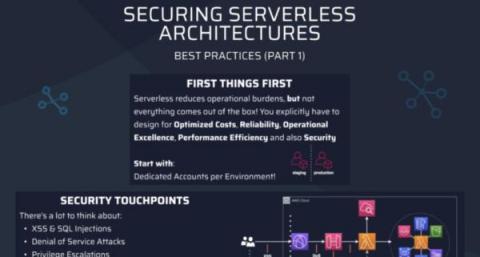
Serverless reduces a lot of operational burdens, but a ������������ ������������������������ is still your responsibility 🔐 From web threats, over IAM principles to auditing and monitoring.