Mailchimp
Not subscribed to OpsMatters Newsletter


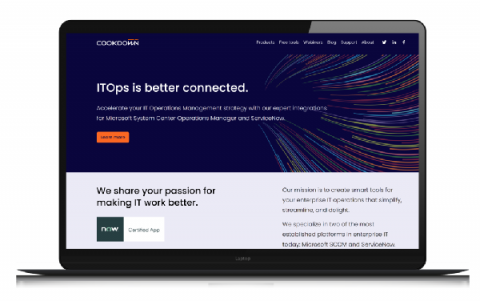
We’re well over a year old now, the team has doubled in size and things are going just swell here at Team_Cookdown. Since we launched, we’ve expanded our product range to include some awesome new solutions like Alert Sync and Discovery and added loads of new features to our existing SCOM toolkit; to bring you expertly crafted integrations solutions for two of the most established platforms in IT enterprise, SCOM and ServiceNow.
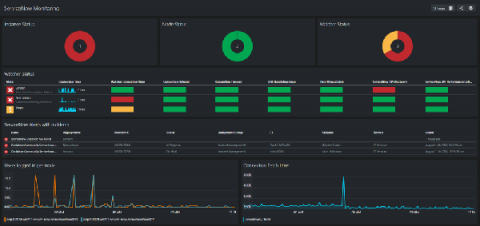
Good news! We’ve created an awesome SquaredUp dashboard pack for our ServiceNow Monitoring MP! You can now enjoy our ServiceNow Monitoring MP and Dashboard pack for free, just click on the links below.
Log maintenance has a hidden cost. Engineers optimize their instance types, storage, networking, dependencies, and much more. However, we rarely consider the engineers themselves. A DevOps culture encourages engineers to own the solutions they build. While this increases team autonomy, it risks splitting the precious bandwidth that the team has. Automation is what makes the DevOps cycle work, and it has to cover log analysis to do a thorough job of catching issues.
Fundamentally, there are logs that will be of intrinsic value to you, and others that are less business-critical. Are you aware of the logging cost to handle, analyze and store these different types of logs? Should you really have the same approach for mission-critical logs as you do for info or telemetry logs? Differentiating your approach for different logs is challenging. If no two logs are truly the same then why should you treat them the same?
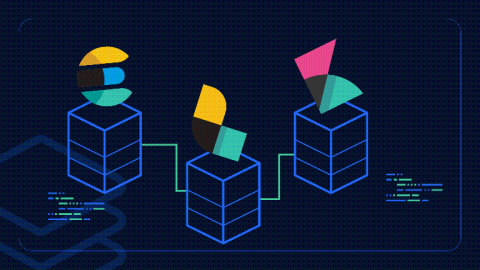
The ELK stack has become a staple of log analytics in recent years, but so too have the stories of complex maintenance and poor scalability. We’re going to discuss some of the problems with a self-hosted ELK stack and the advantages of a SaaS offering like Coralogix.
Today, we announced the launch of a new Grafana Labs product: Grafana Metrics Enterprise, a scalable Prometheus-compatible service designed for large organizations that is seamless to use and simple to maintain. Over the past few years, Prometheus has risen in popularity to become the de facto monitoring system for the cloud native ecosystem around Kubernetes — and for good reason.
Welcome to our monthly update on what’s new from Sysdig! This month is a little eclipsed by last month’s big launch of Essentials and our new SaaS regions, KubeCon EU, and many of us finishing off the summer holidays and getting the kids packed off back to school. Our teams are busy working on some big feature releases which we don’t want to reveal just yet, but I think you’re all going to really love them in the coming months!
One of the most frequent questions customers ask is “how do I find this in my logs?”—often followed by a request to use regular expressions in addition to our logging query language. We’re delighted to announce that we recently added support for regular expressions to our query language — now you can search through your logs using the same powerful language selectors as you use in your tooling and software!
Microservices interact in so many ways. Load balancers, security authentication, and service discovery are just the tip of the iceberg. It can get confusing, if not outright messy. But why be messy when you can be meshy? This is where service meshes come into play, linking the roles these tools have in a common ‘net’ that ties and weaves the whole architecture together. Hashicorp has produced one of the most popular of these organizational assets — Consul Connect.
Linear is an issue tracking tool that helps streamline software projects, sprints, tasks, and bug tracking. Linear’s new Sentry integration helps developers automate issue tracking and sync issues between both services. Teams can create and assign Linear Issues directly from any Sentry Issue or link Sentry Issues to existing Linear Issues. Linear’s automation will close your Sentry Issue once the Linear Issue has been resolved and update the assignee in Sentry if it changes in Linear.