Mailchimp
Not subscribed to OpsMatters Newsletter


The Cloud Is a No-Brainer… Most companies by now have a “to the cloud” initiative that’s at one stage or another of maturity. It’s a great way to make better use of all your resources—people, time, and money. And it gives you more flexibility. You don’t have to size your entire application architecture for important but short-lived peaks, such as Black Friday for retailers or year-end ERP closing for large manufacturers, to name just a couple examples.
MicroK8s was first released in late 2018 and has seen significant adoption rates from developers and enterprises alike ever since. Taking increasing demand and curiosity around the topic, we have already given an introduction to MicroK8s as well as covered how to deploy MicroK8s locally in previous blog posts. This time, we’ll take a look at MicroK8s’ applied value, by examining common MicroK8s use cases. Among others, this includes AI/ML workflows.
The Slack Audit Logs API is for monitoring the audit events happening in a Slack Enterprise Grid organization to ensure continued compliance, to safeguard against any inappropriate system access, and to allow the user to audit suspicious behavior within the enterprise. This essentially means it is an API to know who did what and when in the Slack Enterprise Grid account. We are excited to announce the Slack Add-on for Splunk, that targets this API as a brand new data source for Splunk.
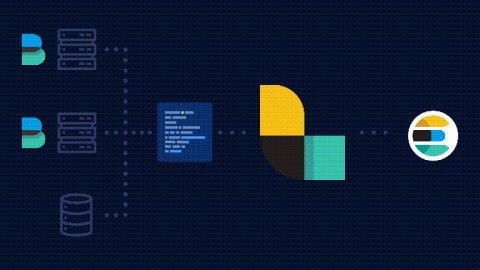
Logstash is a tool to collect, process, and forward events and log messages and this Logstash tutorial will get you started quickly. It was created by Jordan Sissel who, with a background in operations and system administration, found himself constantly managing huge volumes of log data that really needed a centralized system to aggregate and manage them. Logstash was born under this premise and in 2013 Sissel teamed up with Elasticsearch.
Let’s face it, nothing is perfect. The better we architect our systems, though, the more near-perfect they become. But even so, someday, something is likely to go wrong, despite our best effort. Part of preparing for the unexpected is regularly backing up our data to help us recover from eventual failures and this tutorial explains how to use the Elasticsearch Snapshot feature to automatically backup important data.
Searches are integral parts of any application. Performing searches on terabytes and petabytes of data can be challenging when speed, performance, and high availability are core requirements. This blog post will pit Solr vs Elasticsearch, two of the most popular open source search engines whose fortunes over the years have gone in different directions. Both of them are built on top of Apache Lucene, so the features they support are very similar.