Mailchimp
Not subscribed to OpsMatters Newsletter


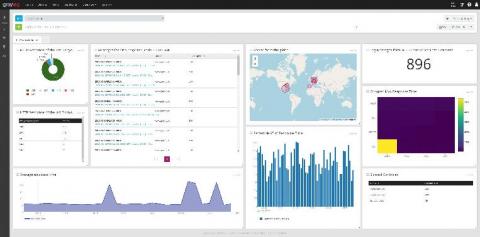
Graylog Enterprise v3.2 is out in the world, customers are using it and loving it, and we want to share with you what we've learned from them. Like most departments, IT is buried with day-to-day activities. Proverbial system and user fires that need extinguishing get in the way of that list of projects gathering dust because nobody has time to get to them. To ease this burden and give you back much needed time to tackle it all, Graylog focused the v3.2 release on usability and productivity.
The Extract and Aggregate fields feature allows users to custom parse historical logs (post ingestion) and get an aggregated count on those newly parsed fields. Enterprise SREs work with large systems that consist of internally built components and external products. Debugging with logs from external products can be extremely challenging.
Coronavirus is changing everything. But amid all the talk of shut-downs, quarantine, and stock market crashes, another huge impact of the current crisis has been a little overlooked: it’s consequences for cybersecurity. With hundreds of thousands of employees now working from home – in the US, Europe, and all over the world – many companies have had to rapidly put in place systems for them to connect their home devices to corporate networks.
The following is a guest post from Jean Tunis, the principal consultant and founder of RootPerformance. You want implementations to be simple. Who doesn’t? But often, that’s not the case. SNMP is one of the oldest used protocols to manage a network. SNMP stands for simple network management protocol, but it might not have been all that simple for you. Maybe it was simple back in the late 1980s, when SNMP became a standard protocol for network monitoring.
A unified cloud infrastructure data model is fundamental for enterprises using multiple cloud vendors. Enterprise customers prefer to use multiple cloud vendors as a way to prevent being locked in and dependent on specific platforms. According to Gartner the top vendors for cloud infrastructure as a service in the years 2017-2018, are Amazon 49.4%, Azure 12.7% and Google with 3.3%.
IAM is the de-facto method of authorization in AWS. Most Kubernetes “Quick Start” guides for AWS do not adequately cover how to manage IAM access in your pods. This blog series will first go over the security issues specific to AWS IAM on Kubernetes, then compare solutions, and then end with a detailed walkthrough for setting up your cluster with one of those solutions.